Last updated November 21, 2026
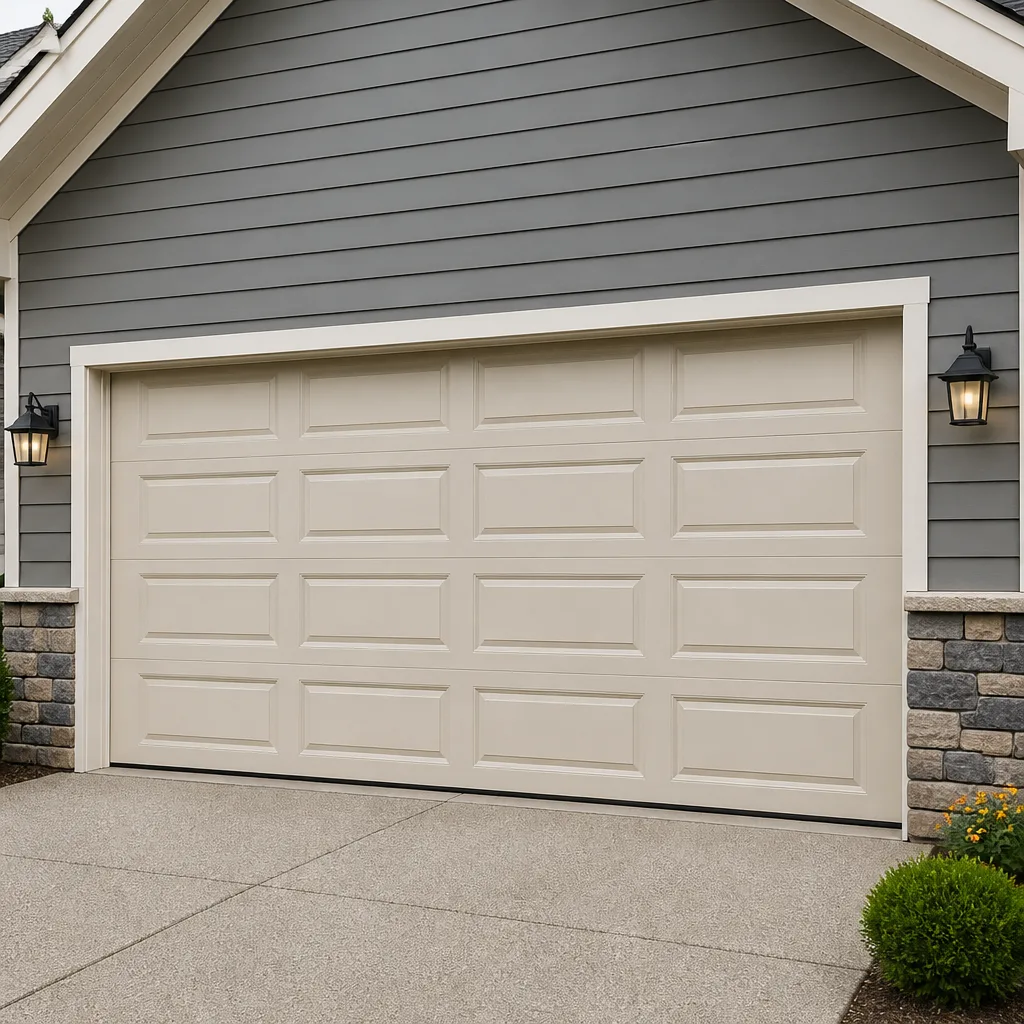 Raised-panel steel
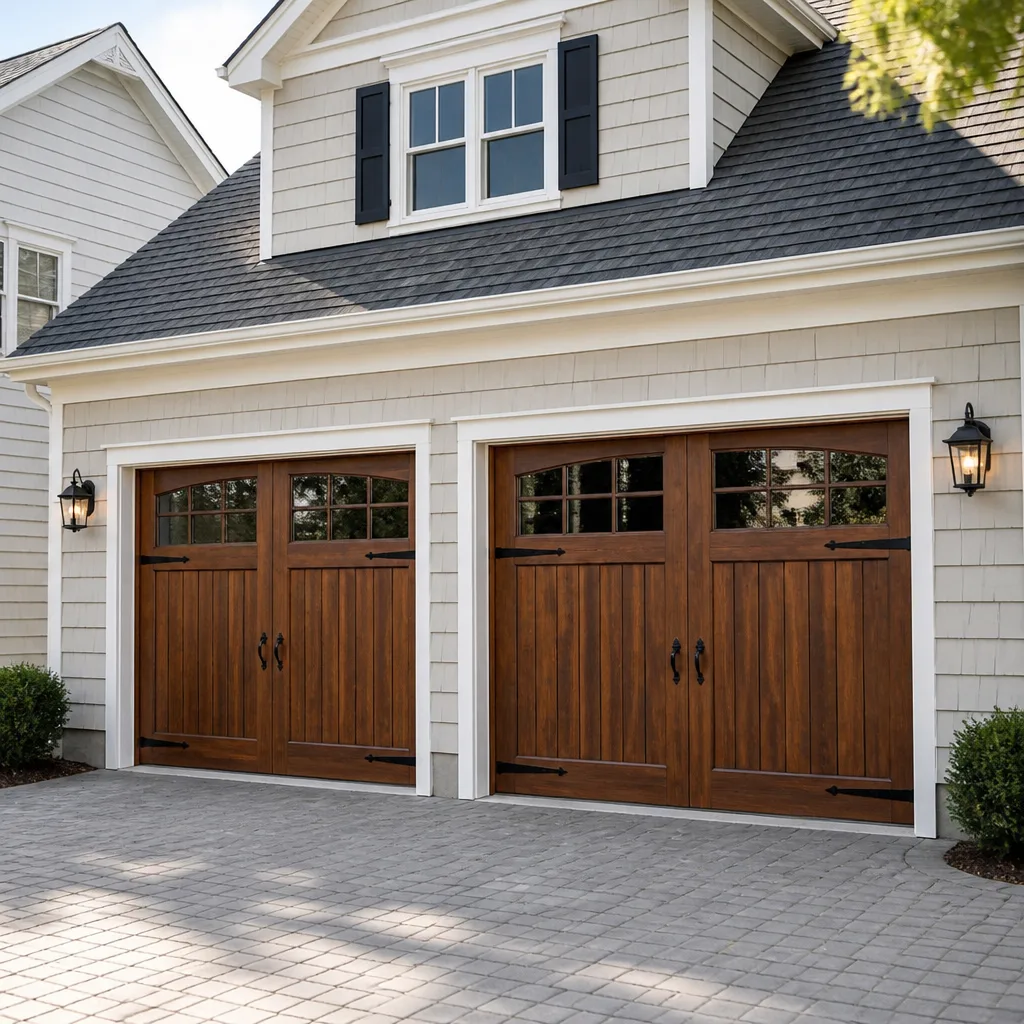 Carriage house
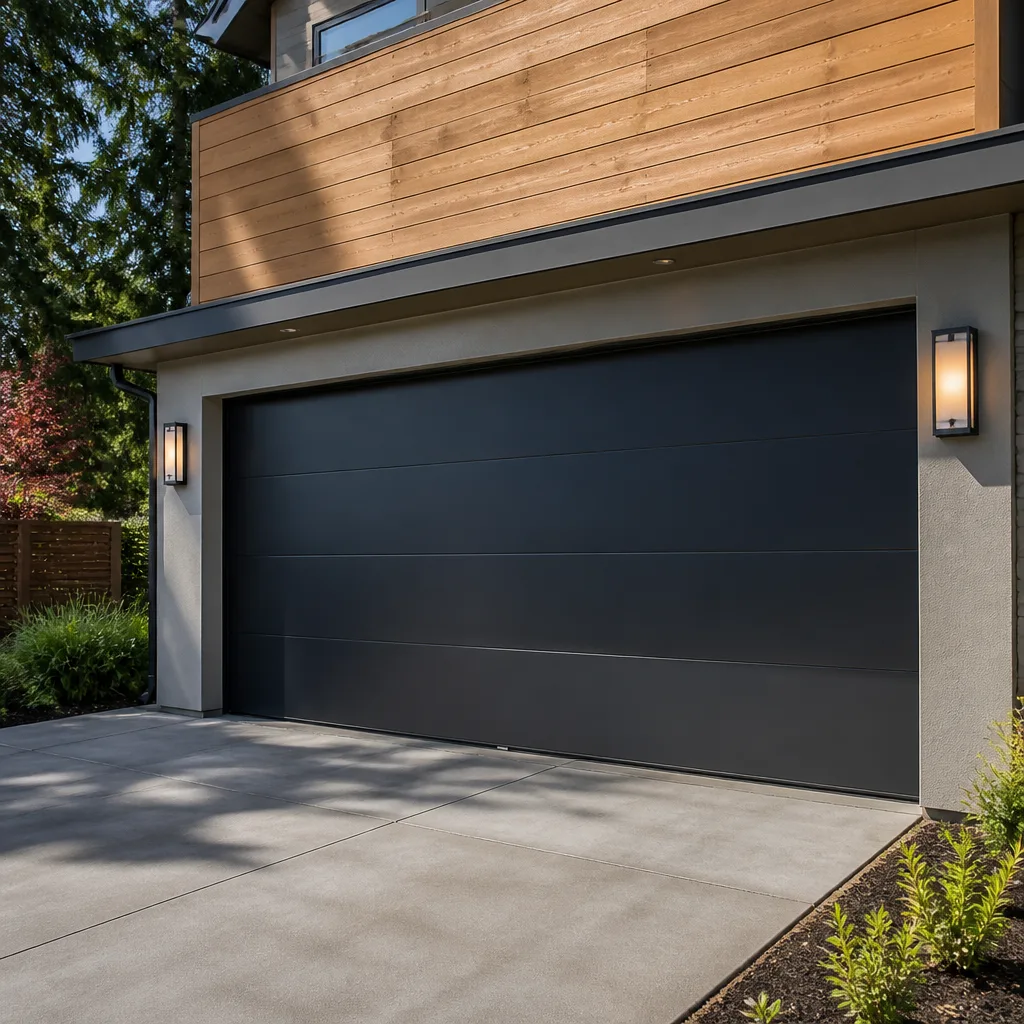 Modern flush
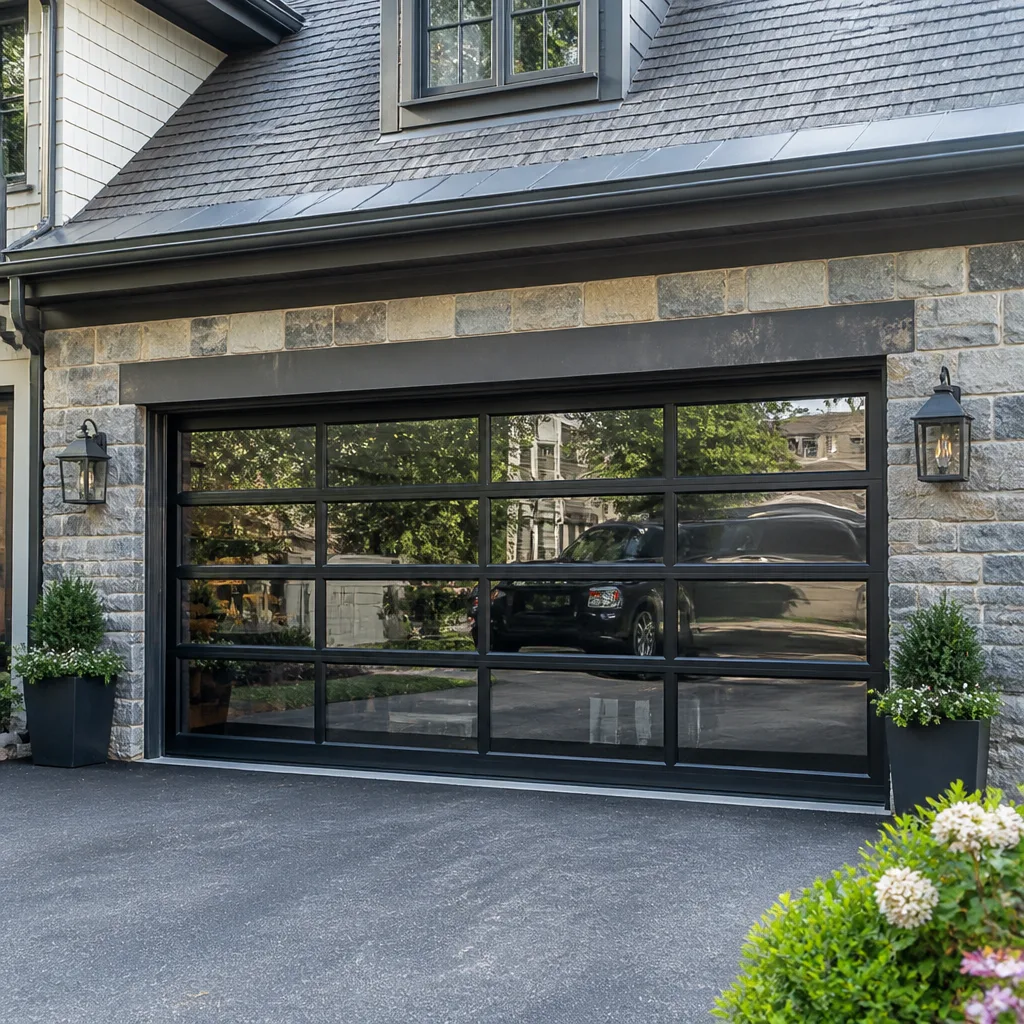 Full-view glass
 LiftMaster openers
 Chamberlain openers
Full 25-point door and opener safety check with every visit - springs, cables, rollers, tracks, and your LiftMaster or Chamberlain opener included
You get a price before we start. It does not change when the pro arrives.
Get your free estimateSeasonal Garage Door Care for Dayton: Year-Round Homeowner’s Guide
Most homeowners treat a garage door like a roof: ignore it until something fails, then call someone in a hurry. Around Dayton, that approach costs more than it saves. The reason is thermal movement. Dayton averages about 26 inches of snow and more than 140 freeze-thaw cycles a year, and every one of those cycles moves your door’s steel up and down a fraction of an inch. Spring tension, seal contact and track alignment all drift with it. The failures that look sudden in January usually started building in October. This guide maps the actual Dayton climate calendar to the maintenance tasks that prevent those calls, month by month.
Quick Answer
Seasonal garage door care in Dayton comes down to getting ahead of thermal stress: lubricate moving parts while temperatures are still above 50°F, clear leaves and debris before the first hard freeze so the bottom seal can seal, watch for slab heave in early spring, and check weatherstripping adhesion in humid summer months. Handled on this schedule, most premature spring, seal and track problems never develop.
Styles & brands we work with
- Raised-panel steel
- Carriage house
- Modern flush
- Full-view glass
- LiftMaster openers
- Chamberlain openers
Table of Contents
- Why Dayton’s Climate Is Hard on Garage Doors
- Pre-Winter Preparation: The 50°F Window
- Freeze-Thaw Cycles and What They Do to Springs
- Spring Thaw, Slab Heave and Bottom Brackets
- Summer Humidity and Wood Composite Doors
- Fall Debris and Bottom Seal Longevity
- A Month-by-Month Dayton Maintenance Calendar
- Storm Windows and What to Watch For
Why Dayton’s Climate Is Hard on Garage Doors
Dayton’s continental climate is the key variable that most maintenance advice ignores. This isn’t a mild, stable climate where a garage door ages evenly. It’s a climate that flexes your door system against itself repeatedly over the course of a single year, and those small movements compound. Every part of a residential garage door system is a moving, tensioned, temperature-sensitive assembly. When the steel panel of a door warms in the sun and shrinks in overnight cold, the attached track and hinges see the same movement, just slightly out of step. Multiply that by more than 140 freeze-thaw cycles annually and you have predictable fatigue points.
The specific stress factors in Dayton break down this way:
- Torsion spring fatigue. Steel springs lose tension faster when they cycle between temperature extremes. A torsion spring that would last a long time in a stable climate does fewer cycles here.
- Seal compression and cracking. Rubber and vinyl seals harden in cold snaps and split when the door cycles during the recovery.
- Track expansion and contraction. Steel verticals and vertical tracks move with the framing, and misalignment shows up as binding.
- Slab movement. Late-winter freezing and spring thaw shift the concrete under a garage slab, moving the bottom brackets.
None of this means your door is doomed. It means maintenance has to be timed. The preventive window is real: lubricants need warmth to penetrate, seals need to be checked before the first freeze, and slab movement needs to be caught early. A general handyman who inspects a door in July and again in January can miss the window between the two where the actual damage happens. A specialist who understands what thermally driven failure looks like in Dayton catches it in the right season. That’s why we built this guide around the calendar instead of the service.
Pre-Winter Preparation: The 50°F Window
This is the most actionable section in the guide. Before the first hard freeze in Dayton, usually by late October or early November, you have a finite window when daytime temperatures stay above 50°F. That’s the threshold that matters. Standard garage door lubricants and penetrating sprays are formulated to spread and penetrate at warmer temperatures. Apply them in 40°F weather and the liquid doesn’t flow into the moving joints quickly enough, it sits on top and collects grit. The cold then locks that grit in place, and by spring the abrasive mix has worn the door hardware faster than it would have with no lubrication at all.
Work through this sequence while it’s still warm:
- Lubricate hinges and rollers on the door and along the track with a formulation appropriate for garage door hardware. Don’t over-apply; a thin, even coat is the goal.
- Lubricate the torsion tube or extension spring pulleys on the hardware side. Never apply anything directly to the coils of a tensioned torsion spring; that’s a job for a trained technician.
- Test the door’s balance by disconnecting the opener and lifting it by hand. It should move smoothly and hold position at roughly any height.
- Inspect weatherstripping on the sides and top, looking for hardened spots and gaps that open when the door flexes.
- Check the bottom seal contact against the slab by closing the door and looking for daylight or a visible air gap.
- Test the opener’s safety reverse feature with an object in the door’s path, so you know the system is responding before the cold months.
If any step turns up a problem, it’s far better to have it addressed in comfortable weather than in the middle of the cold months when a door stuck in one position changes how you live in your own house. A stuck-open door is a security concern and a stuck-closed door is a daily inconvenience, and neither is a good time to be troubleshooting.
Freeze-Thaw Cycles and What They Do to Springs
Springs are the part of the system most affected by temperature cycling, and they’re also the most dangerous to work on. Understanding what happens to them seasonally helps you recognize warning signs, but it should not lead you to touch them. Torsion springs store an enormous amount of energy under tension. Their internal structure is sensitive to repeated movement, and in a freeze-thaw climate they cycle more than their rated count suggests. The cold itself also makes the metal more brittle at the extremes.
What you’ll notice at home:
- A door that feels noticeably heavier lifting by hand than it did last season.
- Interrupted or uneven travel when the opener moves the door.
- A dull thud or bang during operation where the sound used to be smooth.
- The opener giving up partway, or reversing, which can be a sign it’s compensating for a weakening spring.
- A visible gap in the spring coil, which usually means it has broken.
If you see the last sign, stop using the door. A broken torsion spring means the door’s weight is uncontrolled, and an opener attempting to lift a door with no spring support is an overload situation. This is exactly the type of job many general handymen decline for good reason, and garage door repair for broken springs on a home in Dayton should be done by a trained technician. The spring category matters too. A matched pair is almost always replaced together rather than one at a time, so the setup stays balanced. Our technicians have up to 10 years of experience with both torsion and extension spring systems, and they know how a heavier door or a two-car opener setup changes the sizing logic.
Spring Thaw, Slab Heave and Bottom Brackets
When the ground thaws in late winter and early spring in Dayton, the moisture that was locked in the soil expands. That ground movement is real, and it transfers pressure to a concrete garage floor slab, especially on older driveways and homes where the slab meets the ground with minimal clearance. When the slab heaves slightly, the brackets that anchor the bottom of the door to the frame can shift out of alignment with the rest of the track. The result is a door that looks fine visually but binds, scrapes or runs unevenly.
Here’s how to spot it early, before it causes cycling problems:
- Check the floor under the closed door. Look for cracks appearing or widening along the door’s line of travel.
- Watch the bottom seal contact on a closed door. A gap that opens on one side but not the other is an alignment sign.
- Open the door slowly and watch the bottom bracket area. Binding or scraping at the bottom means the track geometry has shifted.
- Look at the vertical track near the bottom. Any daylight gap between the bracket plate and the frame is a red flag.
- Listen for scraping at the very bottom of travel, which is the classic early sign of a misaligned bracket.
A related issue is the door’s weatherstripping on the sides, which can pull away from a frame that shifts with the slab at the bottom corners. If you’re seeing both a seal gap and a track bind, don’t force the door. These are precision aligning jobs, not something to correct by bending parts by hand. That kind of adjustment made incorrectly can make the problem worse and stress the panels.
Summer Humidity and Wood Composite Doors
Dayton’s summer brings humid continental air, and humidity does its own kind of damage to some door types and almost none to others. If your door is steel or aluminum, summer humidity mostly matters for hardware: lubricants can attract dust, and the track can pick up moisture from the slab in a damp basement garage. If your door is a wood composite, engineered wood or steel door with wood-grain finish, the story is different.
- Composite and wood door panels absorb ambient moisture and expand slightly, then contract when conditions dry out. If the finish is compromised, this cycling can lead to swelling at panel edges and finish blisters.
- Weatherstripping adhesive softens in heat and humidity. Bottoms and side seals that were fine through the cold months can peel at the corners during a muggy stretch.
- Steel doors with insulated cores rarely see moisture problems, but the seal around the frame is still doing the important work. A dry summer check on the weatherstripping catches adhesive failure before fall.
- Clopay and Amarr doors in wood or composite finishes should get a finish check in late spring, before peak humidity. If the surface film is intact, the door handles the season fine.
Summer is also the best time to schedule a professional check on your opener system, because the door is cycling most often in warm weather and any motor or sensor issue will surface. We handle both the door and the opener system under one service call, so a hinge tune-up and an opener diagnostic are the same visit. If you notice your garage door opener running louder or reversing unexpectedly, that’s a summer signal worth acting on.
Fall Debris and Bottom Seal Longevity
The most overlooked seasonal task in Dayton is a leaf and debris check, and it matters more than it sounds. Fall leaves, twigs and bark collect against the bottom of the door, especially on garages set back on wooded lots or next to mature trees. That debris sits between the bottom seal and the slab and compresses the rubber, causing a permanent deformation where the seal meets the concrete. Once it’s compressed flat at one spot, the seal no longer closes evenly. The result is a draft, a water entry point, and accelerated wear on that section of the seal.
Run this before the first hard freeze:
- Clear all debris from the door’s path and the base of the track on both sides.
- Check the bottom seal for compression marks where debris sat, and look for splits or hardening.
- Sweep away leaf material that has collected against the side seals and weatherstripping.
- Check gutters and downspouts above the garage so autumn rain doesn’t drain directly against the slab or door frame.
- Look along the track openings for dirt and leaf grit that can collect on the rollers.
If the bottom seal is already hardened, split, or compressed at one end, replacing it early is worthwhile. A compromised seal also lets the cold air in, and that raises the potential for moisture penetration at the door’s lower edge and rust at the panel’s bottom seam. This is a low-cost step compared to the panel work that no seal can prevent. It’s also a job a trained technician finishes quickly even when the door itself doesn’t need anything else. If you’re also planning a replacement before winter, the ideal window for new garage door installation is still the warm months, when the door can be measured accurately and scheduled without weather delay.
A Month-by-Month Dayton Maintenance Calendar
This calendar maps each task to the season when it makes the most difference. Dates shift slightly year to year, but the sequence in a Dayton climate is consistent because the freeze dates are what drive it. The pattern is simple: warm-weather tasks prepare the system for cold, spring tasks catch the damage cold left behind, and the rest of the year is for upkeep. Pin this to the garage wall and check off the boxes.
- March and April (spring thaw): Check for slab movement after the ground thaws. Watch for tracking problems and bottom bracket misalignment as freezing pressure releases. Test door balance and listen for new noises. This is also the time to check the seal for winter damage and see if the door still runs smoothly after its cold-season stress.
- May and June (start of warm season): Check the door’s finish if you have a composite or wood door. Look at weatherstripping adhesive around the frame. Lubricate tracks and hinges since temperatures are now well above the cold threshold. Clean rollers and inspect the opener system’s sensors.
- July and August (peak heat and humidity): Monitor composite door edges and bottoms for swelling. Look for seal adhesive failure. Schedule an opener diagnostic since this is the heaviest cycling season of the year.
- September and October (pre-winter window): This is the key maintenance window when daytime temps are above 50°F. Lubricate all hinges, rollers and hardware. Inspect the bottom seal and side seals. Test the safety reverse. Clear fall debris from the door path. This is the month to correct any issue so it doesn’t become a cold-weather emergency.
- November (first hard freeze approaching): Final weatherstripping check and any seal replacement. Confirm the opener’s safety reverse. Make sure the door moves cleanly when hand-balanced after disconnecting the opener.
- December through February (winter): Keep the door path clear of snow and ice. Don’t force the door if it’s stuck. Watch for a heavy-lift feel or a broken spring gap. Call for service rather than attempting a winter repair in cold conditions.
If a check in any month turns up something beyond routine, the calendar isn’t the point. The point is to have someone who understands what a door looks like in this climate take a look before a small lubrication issue becomes a split spring. Our standard garage door repair service addresses these kinds of seasonal findings, and a free estimate tells you whether a fix is needed now or can wait for the next calendar window.
Storm Windows and What to Watch For
Dayton gets summer thunderstorms and windy spring fronts, and those storm windows are where a lot of garage door damage gets misattributed. Hail is uncommon here, so it’s rarely the culprit for dented or damaged panels. What you’re more likely to see is wind-driven rain pushing against the bottom and side seals, debris blown into the door path, and the occasional tree limb contacting the door or opener. The door system’s response to storm weather is a good early warning of whether the seals are holding and the opener is working correctly.
Keep these three things in mind when a storm hits:
- Check the door after heavy wind. Panels can be pushed slightly out of alignment, and a door that suddenly scrapes or binds after a storm is telling you the tracks moved.
- Inspect the seals after wind-driven rain. Water intrusion at the bottom seal means the seal is compromised even if the door looks fine.
- Test the opener after a power interruption. A post-storm check on the safety reverse and sensor function catches small issues before they compound.
If a storm leaves you with a door stuck open or stuck closed, a standard repair call may not fit the timing. Our emergency garage door service addresses exactly those two situations, when a door fails outside normal business hours and the homeowner can’t simply wait for a weekday appointment. A stuck-open door is a security concern; a stuck-closed door means you can’t leave. That’s the gap an emergency service is for.
Common Mistakes to Avoid
- Lubricating in cold weather. Applying lubricant when temperatures are below 50°F causes it to sit on the surface and collect grit rather than penetrate the joints, which accelerates wear instead of preventing it.
- Using a general handyman for spring work. Torsion springs store significant energy, and a technician without specific training should not attempt tension adjustment or replacement. Spring repair is a specialty job, not a general handyman task.
- Ignoring the slab after a thaw. A bottom bracket misalignment from slab heave gets worse if the door is used without correction, and the movement can stress the panels well beyond the bracket.
- Skipping the fall debris check. Leaves compressed under the bottom seal create permanent deformation at the contact point, so the seal never closes evenly again. Clear it before the first hard freeze.
- Forcing a stuck door in winter. Forcing the opener when the door is stuck in cold weather puts excessive strain on the motor and the spring system. If the door is stuck, stop and call.
- Assuming hail damage when the cause is wind or debris. Hail isn’t a common problem here, so a dent or a panel shift usually came from wind or a falling branch. Look for the real cause before assuming the door needs replacement.
- Treating a summer seal failure as cosmetic. A seal that peels in humidity lets in moisture and cold air all year, and fixing it in warm weather is easier than fixing it in the cold.
See the difference
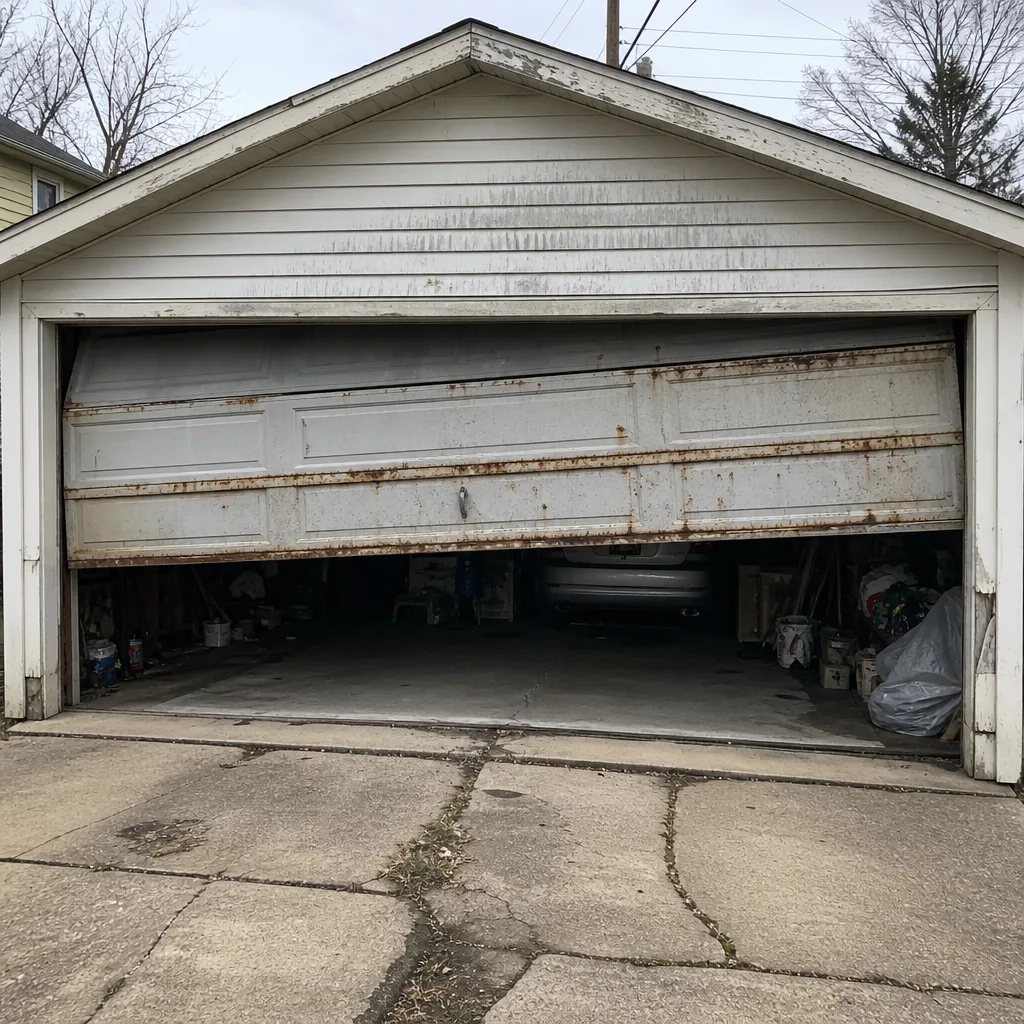 Before
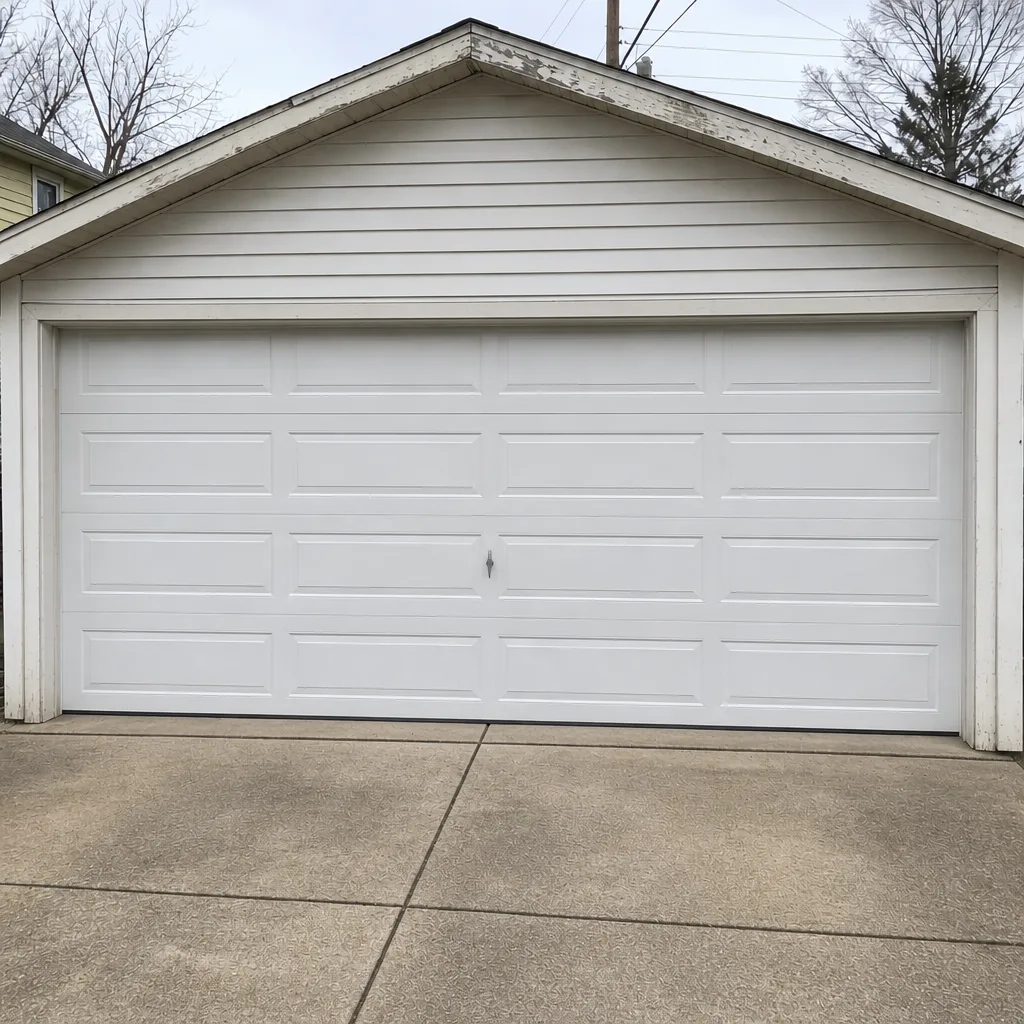 After
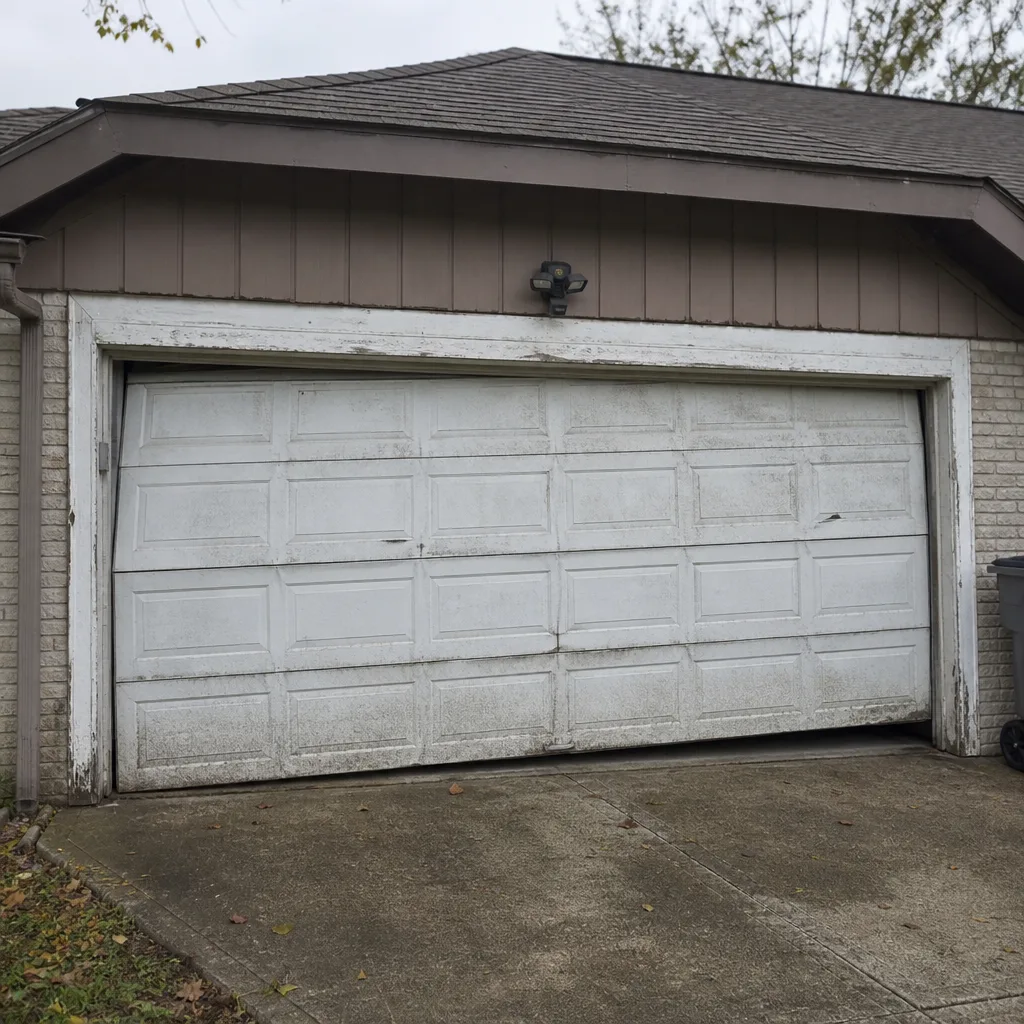 Before
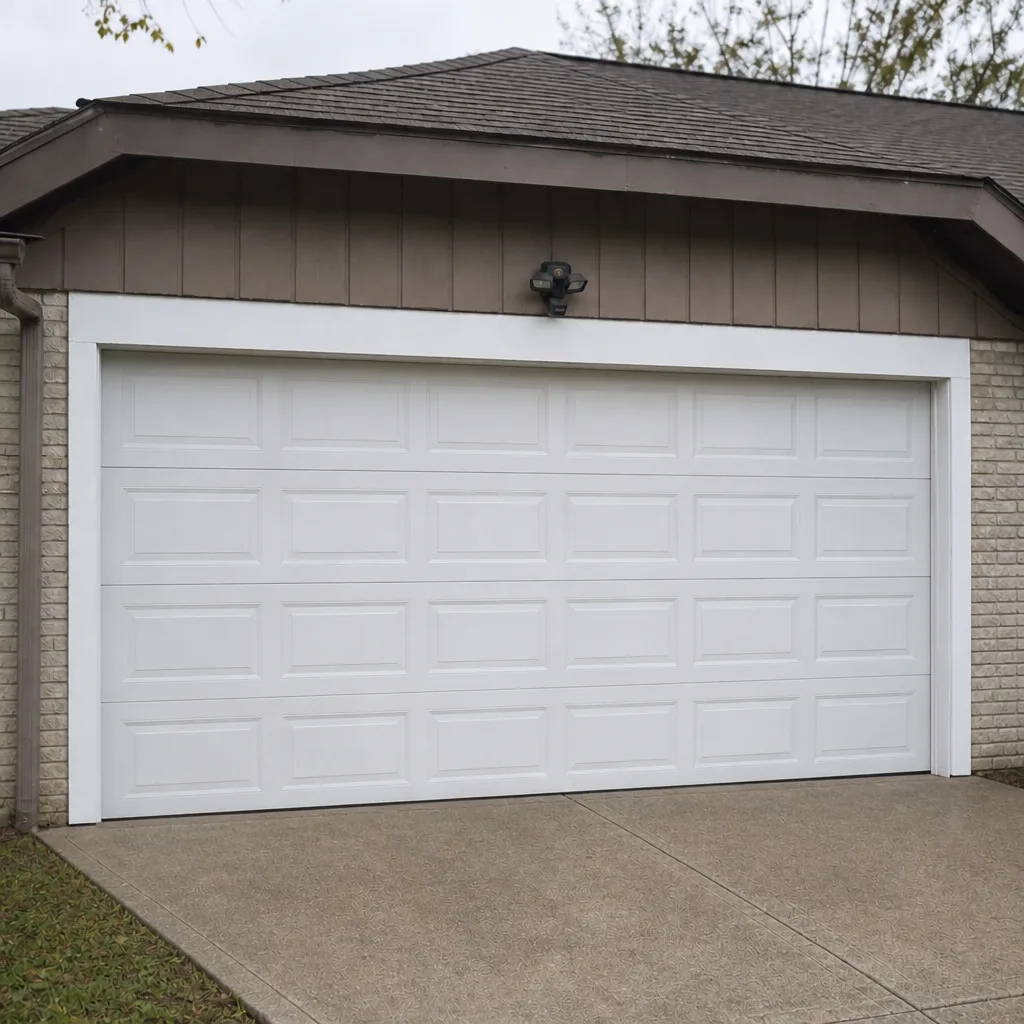 After
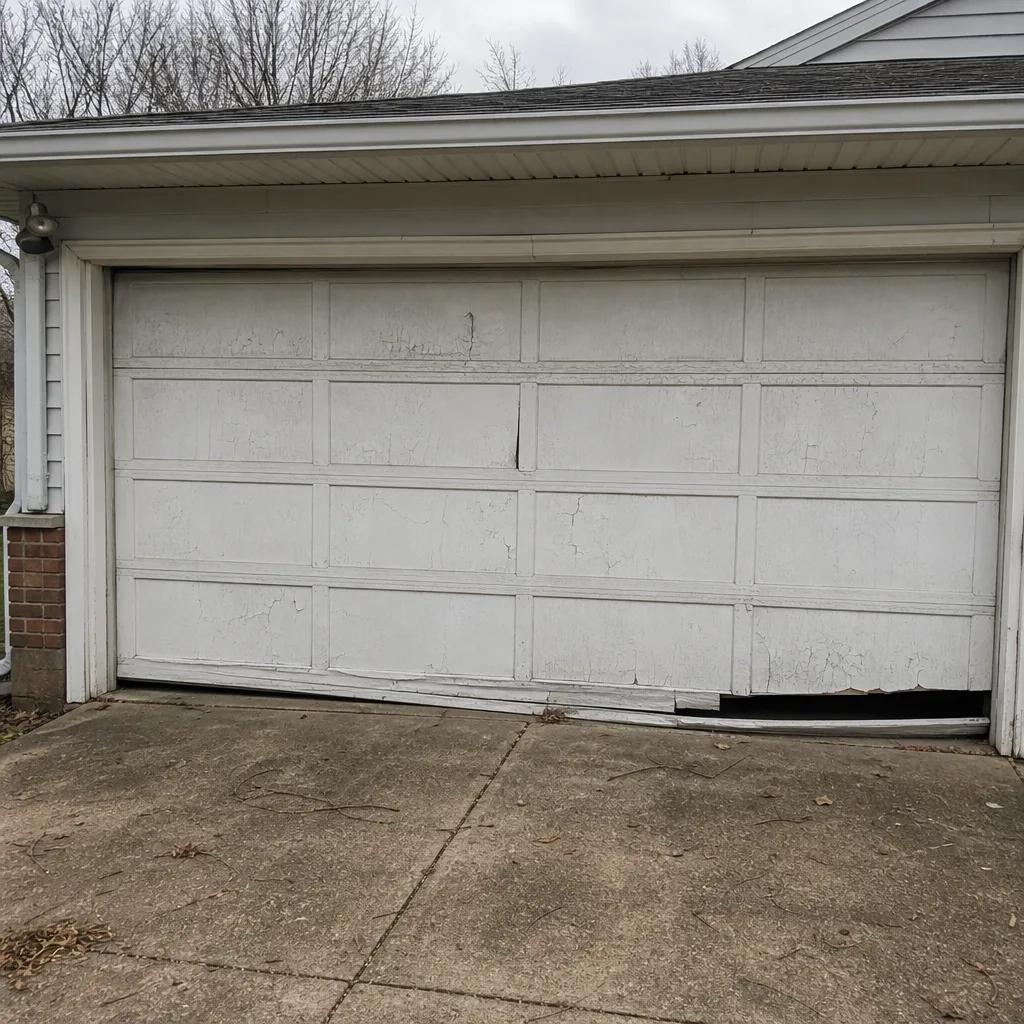 Before
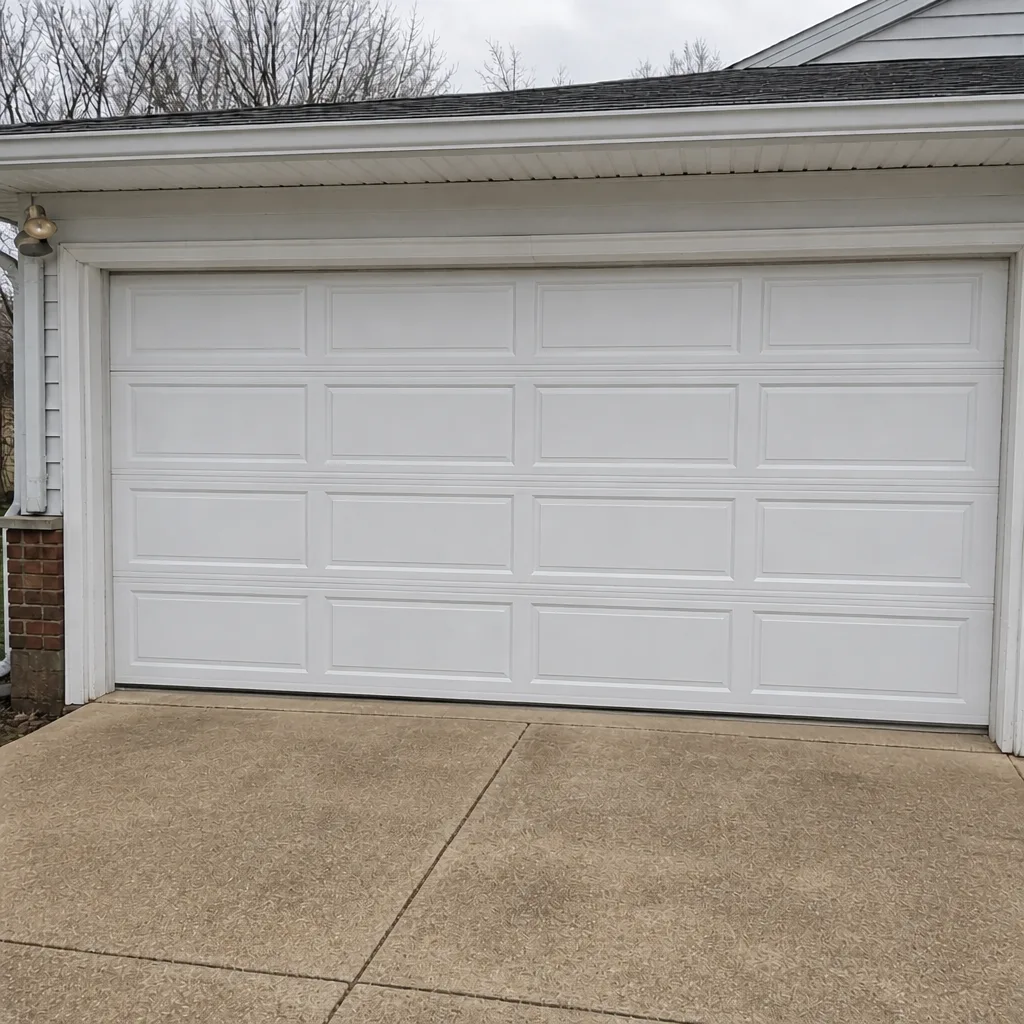 After
When to Call a Professional
Some seasonal tasks are safe for a homeowner: clearing debris, checking for seal gaps, testing the opener’s safety reverse. Some are not. Call a professional for any broken spring (a visible gap in the coil or a sudden loss of door support), any binding or misalignment that doesn’t clear after a simple track wipe-down, an opener that reverses or fails to lift, and any door that is stuck open or stuck closed, particularly during cold weather. For composites and weatherstripping, professional service is worth it when swelling or adhesive failure is more than a surface issue. Dayton Garage Door Repair Co offers free estimates in Dayton, and we can work with your schedules to fit a service call around the season. Call (877) 704-1590.
Frequently Asked Questions
The single best window is late September through early November, while daytime temperatures are still above 50°F and lubricants can properly penetrate the door hardware. A secondary check in March, after the ground thaws, catches winter damage before the first warm-weather use. Between those two windows, quick visual checks in summer and late fall catch smaller issues early.
Routine tuning and lubrication checks are typically the smallest line item in the range, while spring replacement and alignment work are more. The written estimate sets the final price, and the price is quoted and agreed before any work starts. Call (877) 704-1590 for an exact quote; estimates are free.
No. A broken spring means the door’s weight is uncontrolled, and the opener is attempting to lift a load it can’t handle. Using the door in this state risks damage to the opener and the panels. Call for service as soon as you notice the spring gap.
Yes. With more than 140 freeze-thaw cycles a year and average snowfall around 26 inches, the temperature cycling moves the door’s metal and the slab beneath it repeatedly. That stress builds up around spring tension and bottom bracket alignment over time, which is why seasonal checks matter more here than in a milder climate.
Hail is uncommon in this area, so dented panels or damage are more often caused by wind, blown debris or a falling branch than by hail. If a door is damaged after a storm, it’s worth checking the cause before assuming replacement is needed.
We work on eight of the most common residential brands: LiftMaster, Chamberlain, Genie, Clopay, Amarr, Wayne Dalton, Craftsman and Raynor. That means technicians arrive already familiar with the opener system and door hardware in your garage, which shortens a diagnostic visit and reduces the chance of a return trip for a separate part. Call (877) 704-1590 to talk through your door and opener setup.
The Bottom Line
Dayton’s climate sets the maintenance schedule that a garage door actually needs: lubricate before the first freeze while temperatures are still above 50°F, clear fall debris so the bottom seal survives the winter, watch for slab heave in spring that misaligns the bottom brackets, and check seal adhesion in summer humidity. The consistent failure pattern here isn’t surprise, it’s timing. The door that fails in a cold snap was usually set up for failure months earlier. Get the seasonal windows right, and most repair calls never happen. When a spring breaks or the door gets stuck, that’s a specialist call, and we’re available for those situations.
Written by the team at Dayton Garage Door Repair Co.