Last updated November 21, 2026
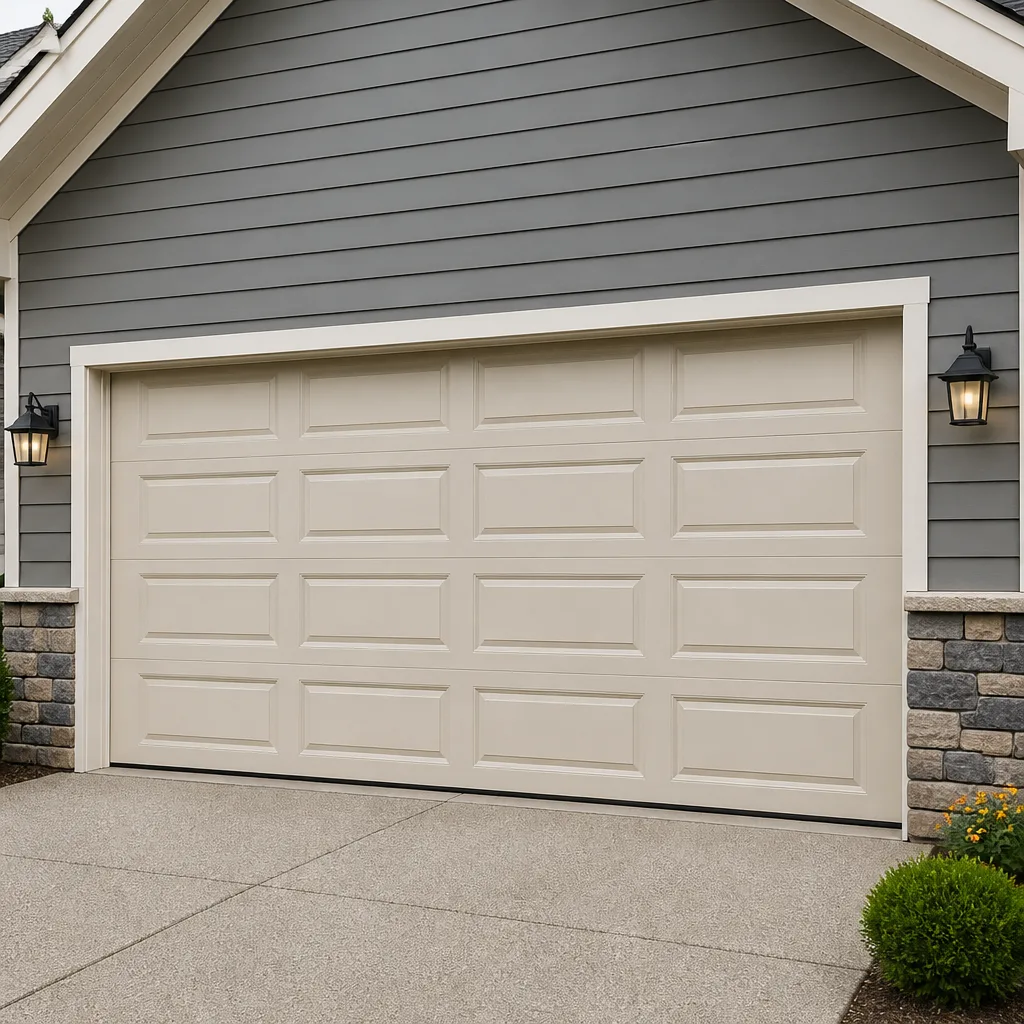 Raised-panel steel
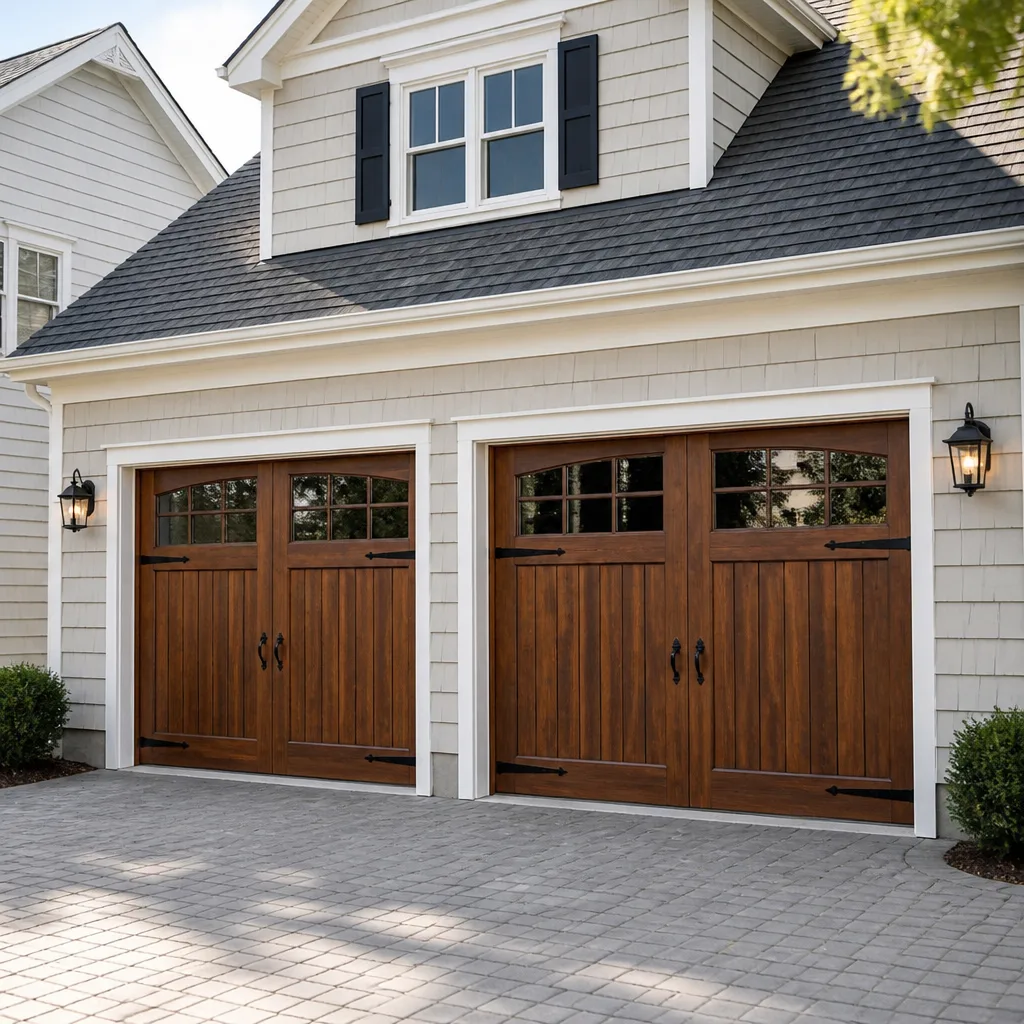 Carriage house
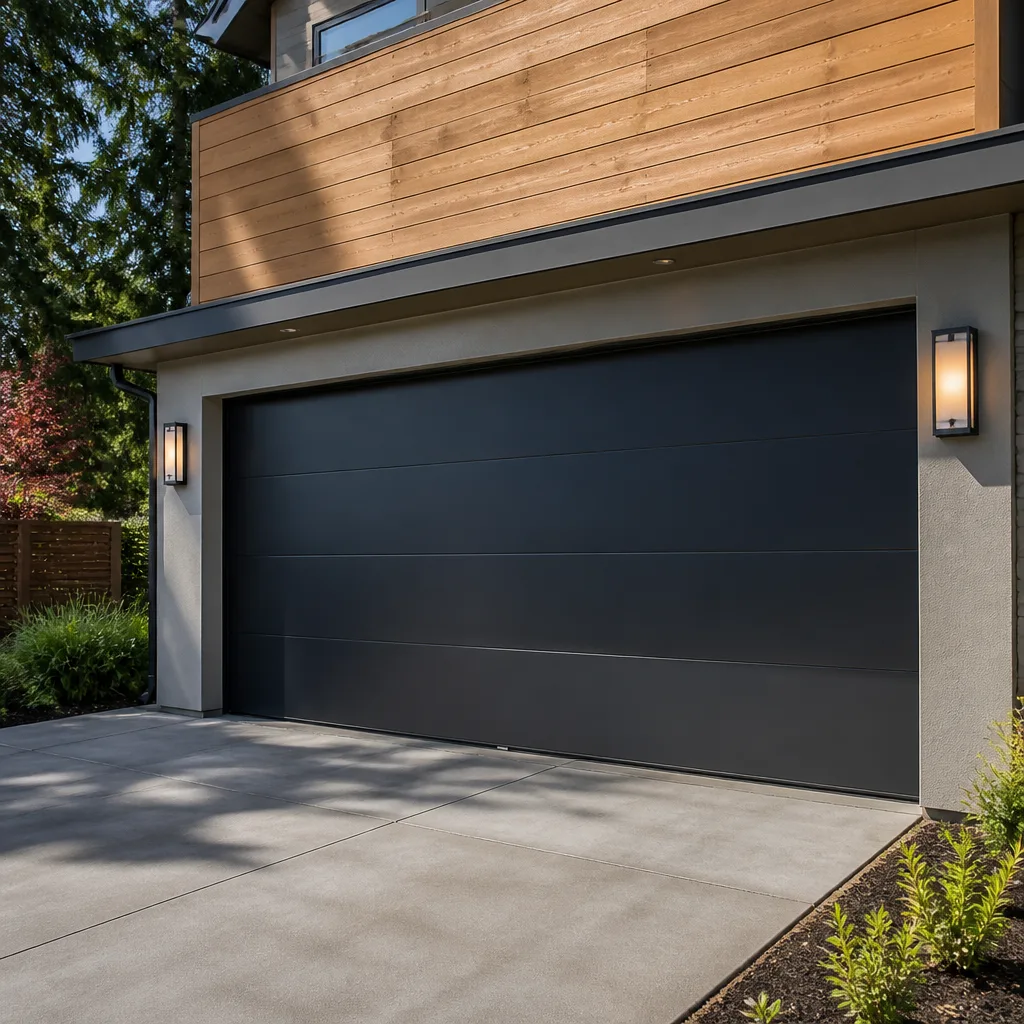 Modern flush
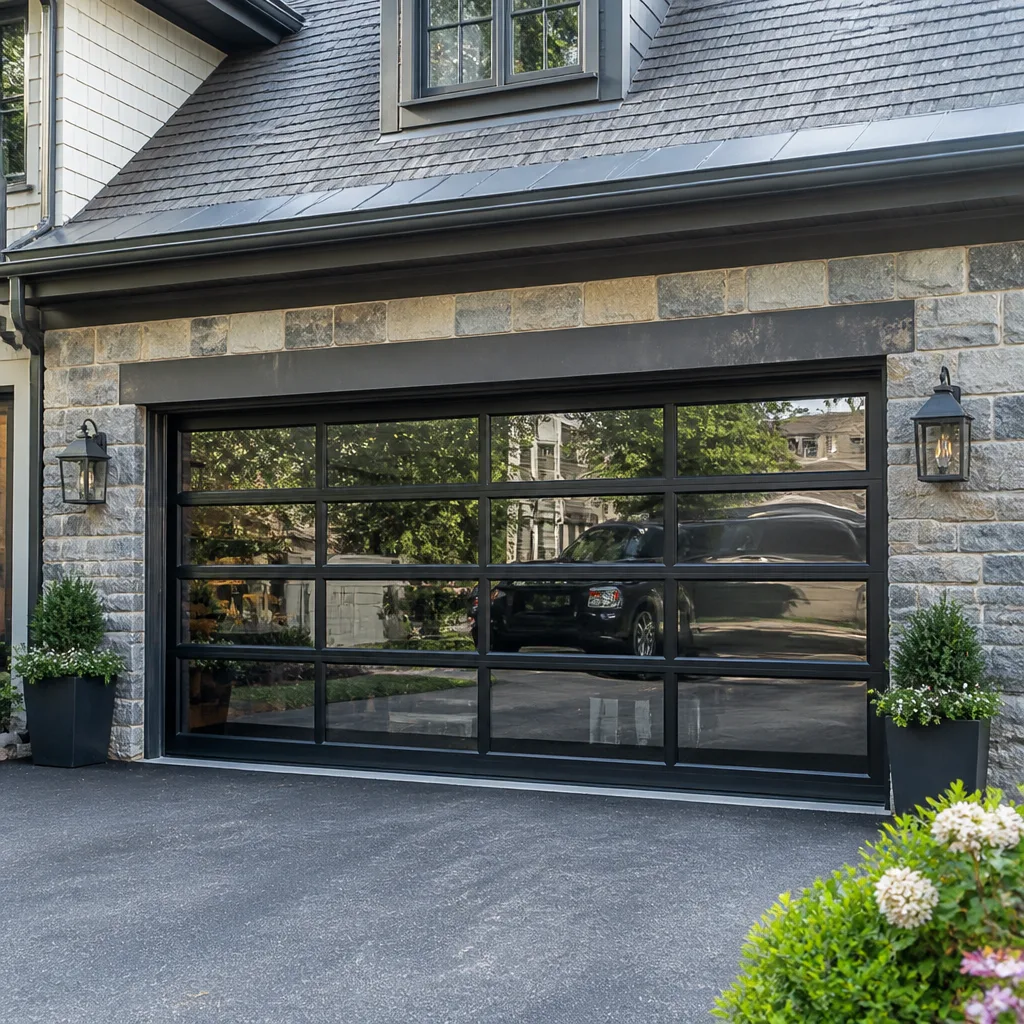 Full-view glass
 LiftMaster openers
 Chamberlain openers
Full 25-point door and opener safety check with every visit - springs, cables, rollers, tracks, and your LiftMaster or Chamberlain opener included
You get a price before we start. It does not change when the pro arrives.
Get your free estimateDIY vs Professional Garage Door: The Dayton Homeowner’s Decision Guide
Most advice on garage doors splits into two useless camps. One says touch nothing, call a pro for every squeak. The other, all over video sites, implies a mechanically inclined homeowner can handle anything with a wrench and an afternoon. Both miss the point. The real question isn’t DIY versus professional. It’s which specific jobs belong to which. A torsion spring stores roughly 100 ft-lbs of torque when wound, and that energy releases in milliseconds if something slips. That’s not a sales pitch, it’s physics. This guide draws the line precisely: which tasks save you money safely, which ones create liability and real danger, and how that math works in Dayton.
Quick Answer
Safe DIY garage door tasks include lubrication, weatherstripping replacement, photo-eye sensor alignment, and remote or keypad programming. Spring replacement, cable replacement, and track realignment should go to a trained technician because of stored energy, cable tension, and the risk of a door coming down. In Dayton, most homeowners save money by handling the small maintenance themselves and calling a specialist for anything involving springs, cables, or the door’s balance.
Styles & brands we work with
- Raised-panel steel
- Carriage house
- Modern flush
- Full-view glass
- LiftMaster openers
- Chamberlain openers
Table of Contents
- What garage door work is genuinely safe to DIY?
- Why springs, cables, and tracks are different
- How DIY work affects Clopay, Amarr, and Wayne Dalton warranties
- Liability and insurance when you do structural work in Ohio
- Cost-benefit: opener, spring, and panel replacement in Dayton
- What Dayton weather does to a door (and what you can prevent)
- Common mistakes to avoid
- Frequently asked questions
What garage door work is genuinely safe to DIY?
There’s a real list of jobs a careful homeowner can do without meaningful risk. These are the ones where a mistake produces an annoyance, not an injury or a damaged door. If you’re mechanically confident and willing to read instructions, start here.
- Lubrication. A garage door has rollers, hinges, and a torsion or extension spring system that all need periodic lubrication. A lubricant made for garage door hardware on the rollers, hinges, and bearing plates quiets the door and slows wear. Don’t lubricate the tracks themselves; they’re meant to stay clean and dry so the rollers roll rather than slide.
- Weatherstripping. The bottom seal and the perimeter stops take a beating. Replacing a worn bottom seal is a straightforward pull-and-press job on most doors.
- Photo-eye sensor alignment. If your door reverses for no obvious reason, the safety sensors at the bottom of the tracks are usually misaligned or dirty. Wiping the lenses and nudging them back toward each other fixes most of these.
- Remote and keypad programming. Pairing a new remote or resetting a keypad code is a menu-and-button job, brand-specific but simple. We work on LiftMaster and Chamberlain systems regularly, and their pairing steps are well documented.
- Visual inspection. You can and should look. Check for frayed cables, a door that looks crooked, gaps at the bottom, and worn rollers. Spotting a problem early is free.
What you shouldn’t do is treat that list as a warm-up for the bigger jobs. The skills are different, and the consequences scale fast. Our garage door repair work often starts with a homeowner who was comfortable with maintenance and then assumed a spring or cable would be the same kind of task.
Why springs, cables, and tracks are different
A torsion spring isn’t a heavy spring you muscle into place. It’s a stored-energy device. Wound to the tension a door needs, it holds enough force to lift hundreds of pounds, and it stays loaded even when the door is down. When that energy releases unexpectedly, the spring, the winding bars, and anything in its path move without warning. That’s why spring repair is one of the few garage door jobs many general handymen won’t take on.
Cables carry the same kind of tension. They’re under load constantly, and a frayed or improperly seated cable can snap while you’re near it. The cable on one side is holding up half the door’s weight. Replacing one means managing that load with the spring released first, in the right order, with the door secured.
Track realignment looks the least intimidating of the three, but it’s a structural job on a moving system. A door that’s off its track is usually off because something else moved first: a bent track, a bent roller, a failed spring, or a panel that took a hit. Straightening the track without finding the cause means it comes back off. Worse, a door that jumps the track under power can come down.
Here’s how we think about it. Safe DIY tasks deal with the door at rest. Spring, cable, and track work deals with the door under load. That’s the dividing line, and it holds whether you’re in Oakwood, Kettering, or out toward Beavercreek. Our technicians have up to 10 years of experience precisely because these jobs reward repetition and a healthy respect for what’s stored in a wound spring.
How DIY work affects Clopay, Amarr, and Wayne Dalton warranties
Manufacturer warranties on residential doors and openers generally cover defects in materials and workmanship, not damage from installation or repair done incorrectly. That distinction matters. If you install a Clopay door yourself and it later sags because a torsion spring was wound to the wrong tension, the warranty claim runs into a question the manufacturer will ask: who set the spring, and how? Amarr and Wayne Dalton warranty documents read the same way. Improper installation is usually excluded.
The pattern is consistent across the brands that fill most Dayton driveways:
- Warranty coverage typically assumes the door was installed to the manufacturer’s specifications by someone who followed them.
- Self-installed doors often still carry a materials warranty, but the labor and the responsibility for correct setup land on you.
- Opener warranties work the same way. A LiftMaster or Genie unit installed with the wrong spring tension, the wrong header, or a misaligned rail can produce failures the manufacturer won’t cover.
None of this means you void a warranty by changing a weather seal or programming a remote. Wear items and user-serviceable parts are expected to be handled by the homeowner. The line is at structural and mechanical work: springs, cables, tracks, and full installation. If a manufacturer asks for proof the door was installed correctly, a professional install gives you a clean answer.
If you’re weighing a replacement rather than a repair, garage door installation is where the warranty question gets decided before the door is even hung. Ask about it up front.
Liability and insurance when you do structural work in Ohio
Ohio homeowner policies generally cover accidental damage to your own property, and often injuries to others on your property, subject to the policy’s terms. What they typically don’t do is cover a job done negligently that then fails on someone else. That’s the gap most homeowners never think about until it matters.
Picture the realistic sequence. You replace a torsion spring yourself. The door works for a while, then a cable fails or the door comes down hard and damages a car in the driveway, or a family member gets hurt. Your insurer looks at how the work was done. If there’s no record of a professional install and the failure traces back to the work itself, coverage can become a dispute rather than a straightforward claim.
There’s a second layer for anyone who rents out a property or has others using the garage regularly: a garage door is a large moving object under tension, and a failure is a safety event, not just a repair bill.
The practical takeaway for Dayton homeowners is straightforward. Handle the low-risk maintenance yourself and keep it low-risk. For spring, cable, track, and install work, having the job done by a trained professional gives you a clean, documented answer if anything ever goes wrong. The local pro we connect you with is licensed and insured as their state requires, and we can work with your insurer if a claim comes up.
Cost-benefit: opener, spring, and panel replacement in Dayton
Prices vary by door, brand, and condition, so treat every figure below as a typical estimate. The written estimate sets the final price, and we always quote and agree on that price before any work starts. Here’s how the three most common jobs compare when you weigh DIY against a professional.
Opener replacement
An opener swap is the most DIY-friendly of the three. The unit mounts to existing hardware, wiring is usually a matter of connecting low-voltage control wires and plugging in, and modern openers come with clear instructions. Where it goes wrong is the details: the safety sensors, the force settings, and the travel limits. Get those wrong and the door reverses halfway or doesn’t close all the way.
- Typical Dayton range for the opener itself: roughly $180 to $400 depending on brand and features.
- Typical installed price through a specialist: roughly $350 to $700, including removal of the old unit, mounting, sensor setup, and testing.
- Your DIY savings if it goes smoothly: the labor and setup portion, which is most of the difference.
This is the one where a capable homeowner can come out ahead. If the door itself is heavy, unbalanced, or the old opener was struggling, that’s a sign the opener isn’t the real problem. Our garage door opener repair calls often end with a door adjustment rather than a new motor.
Spring replacement
A torsion spring price is per spring. Most doors run a matched pair, replaced together, so a pair costs about twice the single-spring figure. It’s the job we’d steer almost anyone away from. The cost of a professional replacement is modest compared to the risk of a self-produced injury or a door that comes down.
- Typical Dayton range, one torsion spring: roughly $180 to $340.
- Typical Dayton range, matched pair: roughly $360 to $680, with new cables often included depending on condition.
- Extension spring replacement: generally toward the lower end of that range, since the hardware is simpler.
- DIY material cost: the spring, maybe the winding bars, if you already own them. The savings disappear the moment something slips.
The materials are not expensive. The reason we don’t recommend DIY here is what the spring does when it’s wound, not what it costs to buy.
Panel replacement
A single damaged panel on a multi-panel door can often be replaced rather than the whole door, which is where homeowners hope to save. The complication is that panels match by model and often by production run. A Clopay or Wayne Dalton panel from a different batch may not match in shade or profile.
- Typical Dayton range for a single panel: roughly $150 to $450, depending on door model and whether it’s insulated.
- Full door replacement: considerably more, and often the right call when several panels are failing or the door is out of production.
- Where DIY fails: matching the panel, lifting it safely into the track, and rebalancing the door afterward.
Panel work involves lifting a heavy, awkward piece into a track system and then confirming the door still balances. If the balance changes, the springs need adjustment. That’s part of the same job, which puts it past the DIY line for most people.
What Dayton weather does to a door (and what you can prevent)
Dayton’s seasons are hard on a garage door in ways a mild climate doesn’t produce. Summer humidity swells wood doors and works on the seals. Winter cold contracts metal and makes old springs more likely to fail, since a cold spring is a brittle spring. The freeze-thaw cycle through a southwest Ohio winter means the door opens and closes against ice at the bottom seal and grit that gets into the tracks. A garage that’s attached to the house also pulls in whatever air sits around the door, so gaps at the bottom seal cost you heat all winter.
Most of what the weather does is preventable with the safe maintenance list from earlier:
- Lubricate the rollers, hinges, and bearing plates as the seasons change, particularly before the first hard freeze.
- Replace a worn bottom seal before winter so ice and cold air stay out.
- Keep the tracks clean and clear of grit so rollers aren’t grinding through a Dayton spring.
- Look for rust on the springs and cables, and watch for the door getting harder to lift over time, which usually signals a spring losing tension.
The part weather controls and you don’t is when a spring finally gives. Cold snaps tend to surface a spring that was already near the end of its life. That’s also when a door is most likely to get stuck open or stuck closed, which is where emergency garage door service matters: stuck open leaves the house exposed, stuck closed means the car doesn’t leave.
Common Mistakes to Avoid
- Winding a torsion spring without the right bars and technique. The bars can slip and the spring can release with the stored energy still in it. This is the single most common serious injury in the trade, and it’s why springs stay on the professional side of the line.
- Greasing the tracks. Tracks are supposed to stay dry. Lubricant makes rollers slide and skip instead of roll, which causes binding and premature wear. Lubricate the rollers and hinges, not the tracks.
- Replacing one spring of a pair. The pair shares the load, and a new spring next to an old one leaves the door unbalanced. Replace both.
- Fixing a track without finding what pushed the door off it. A bent track is usually a symptom. Straighten it and skip the cause, and the door comes right back off.
- Installing a door without checking the header. In Dayton homes, older garages often have headers that aren’t built for the weight of a modern insulated door. A professional measure catches this before you buy.
- Skipping the safety sensor check after any opener work. A door that doesn’t reverse on contact with an object is a hazard to anyone in the driveway. Test it after every adjustment.
- Assuming a new door falls under warranty no matter who installs it. On Clopay, Amarr, and Wayne Dalton doors, an installation that doesn’t follow the manufacturer’s specs can leave you holding the repair bill.
We’ve seen every one of these on a service call, and most of them were avoidable. If you’re already past the point of maintenance and into a malfunction, we’re the Dayton Garage Door Repair Co team you can call to work on the brand in your garage.
See the difference
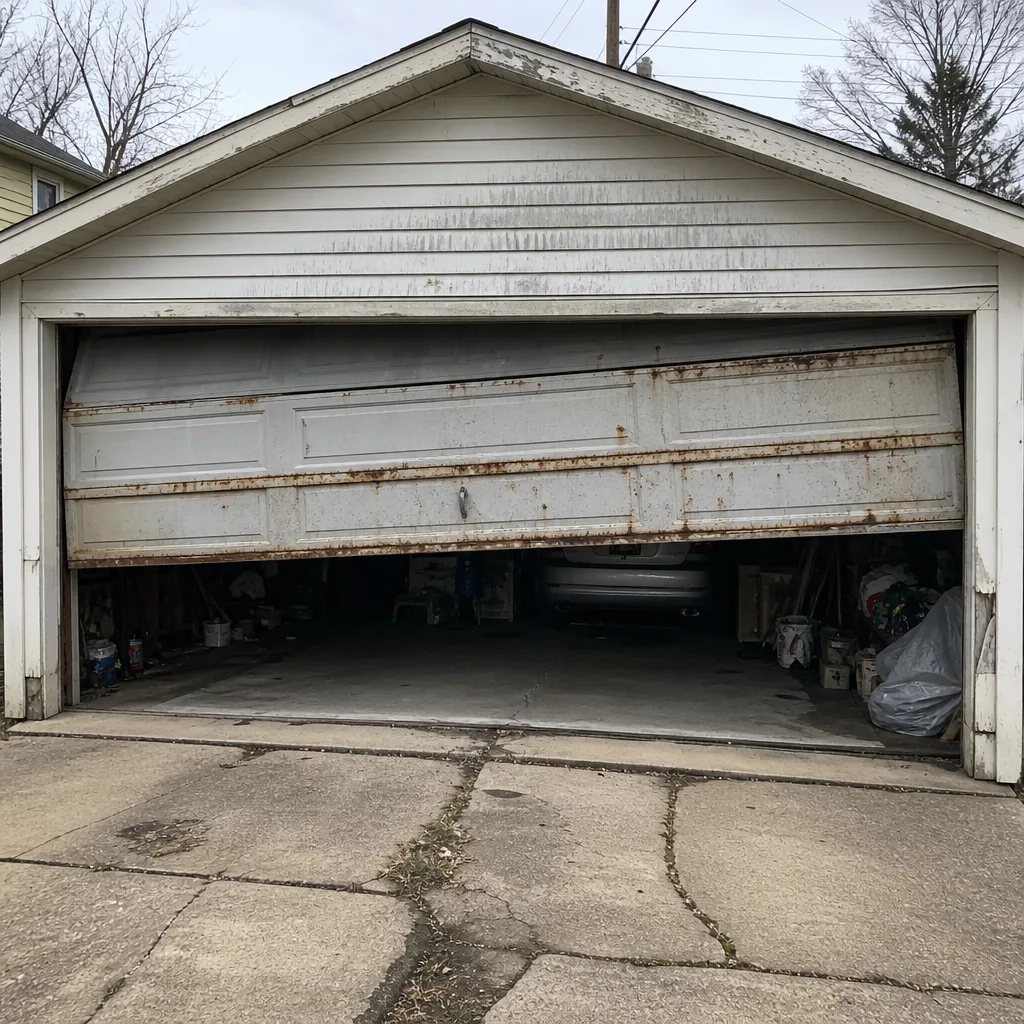 Before
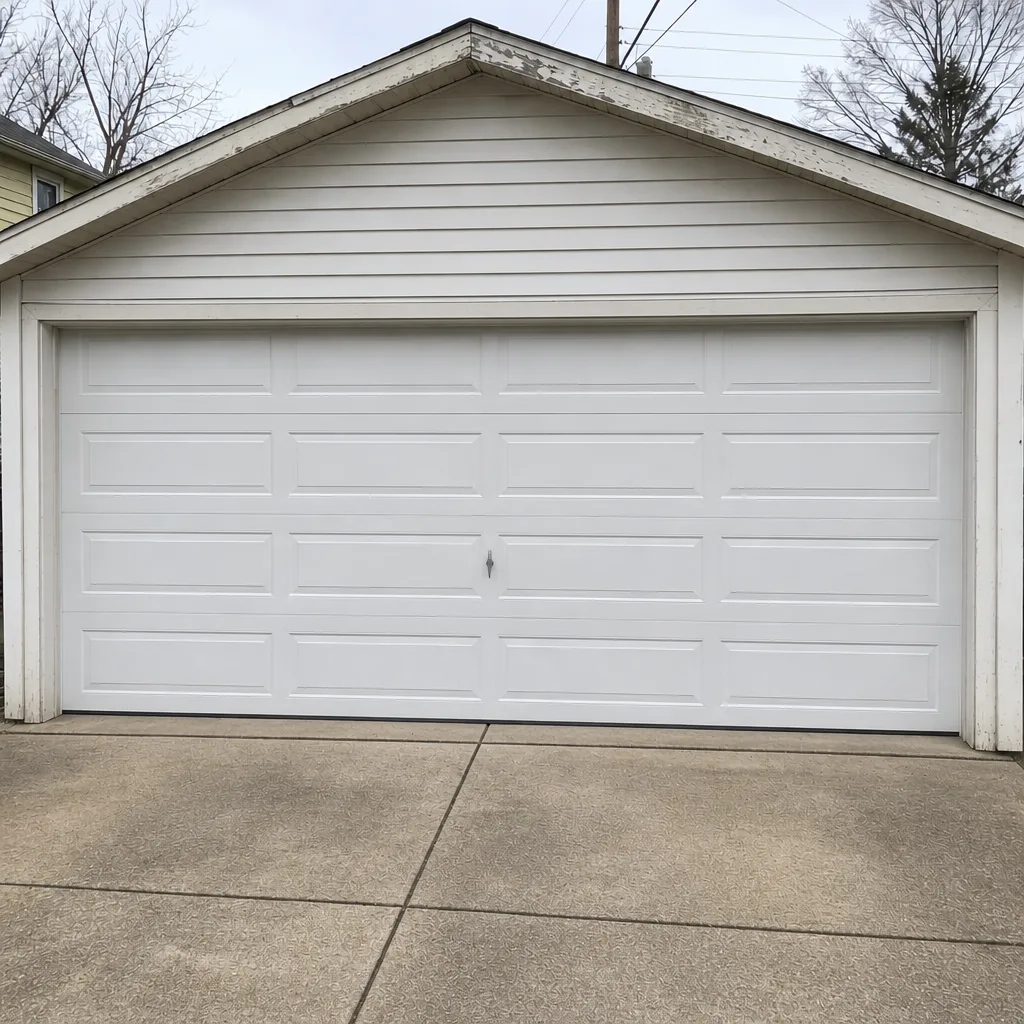 After
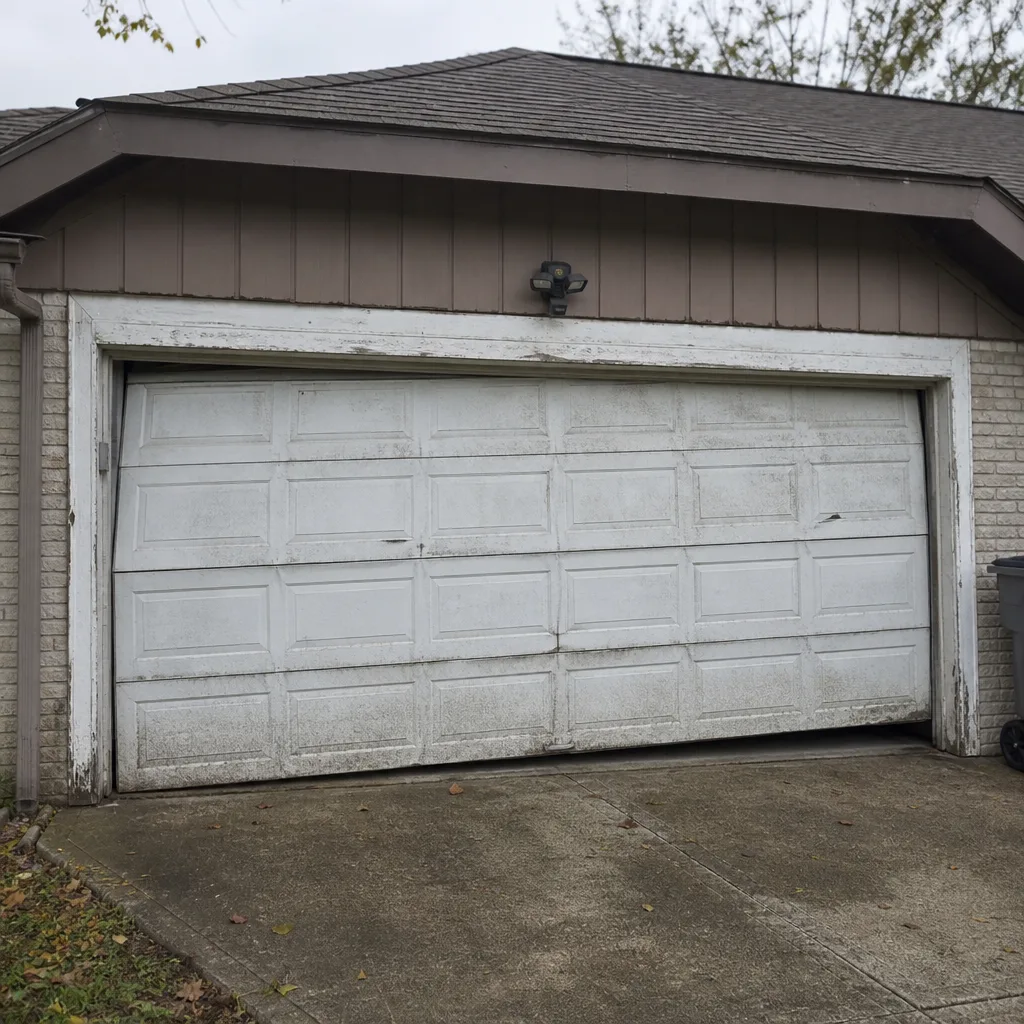 Before
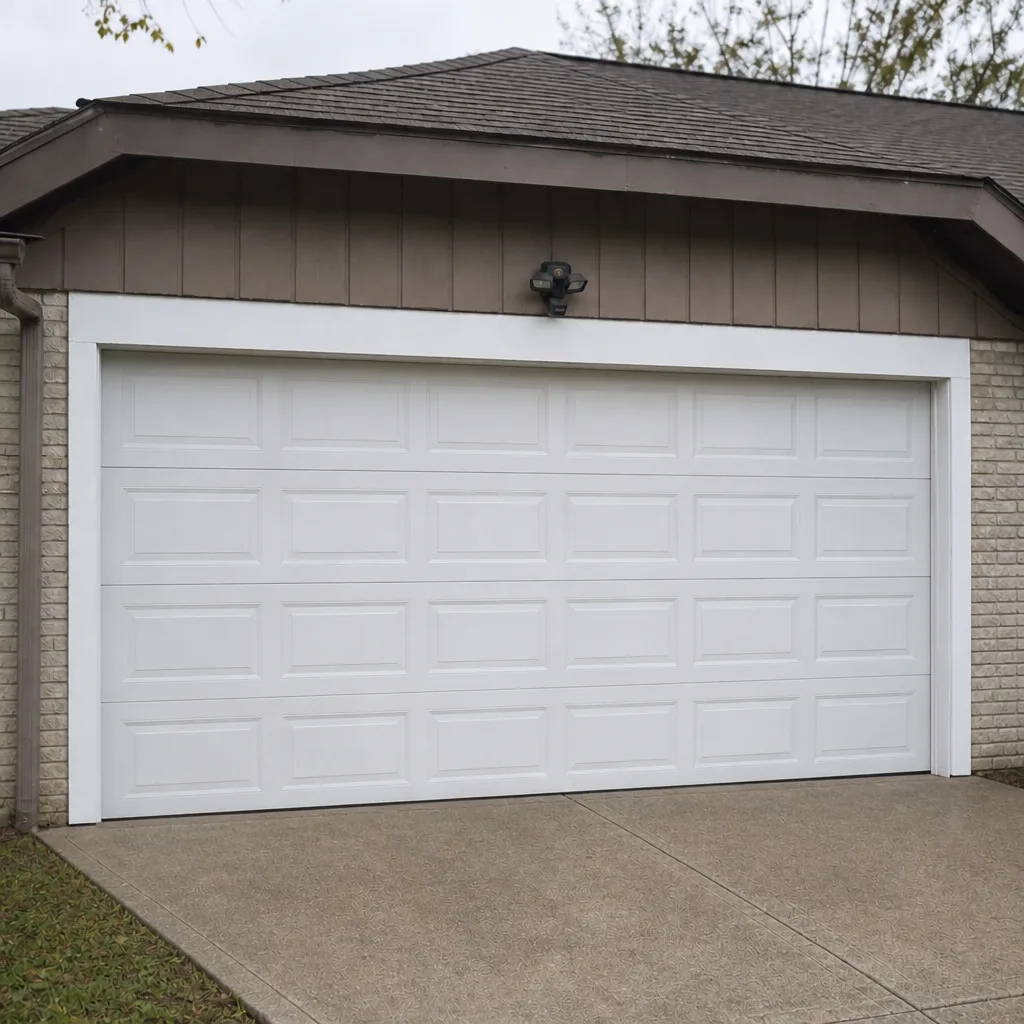 After
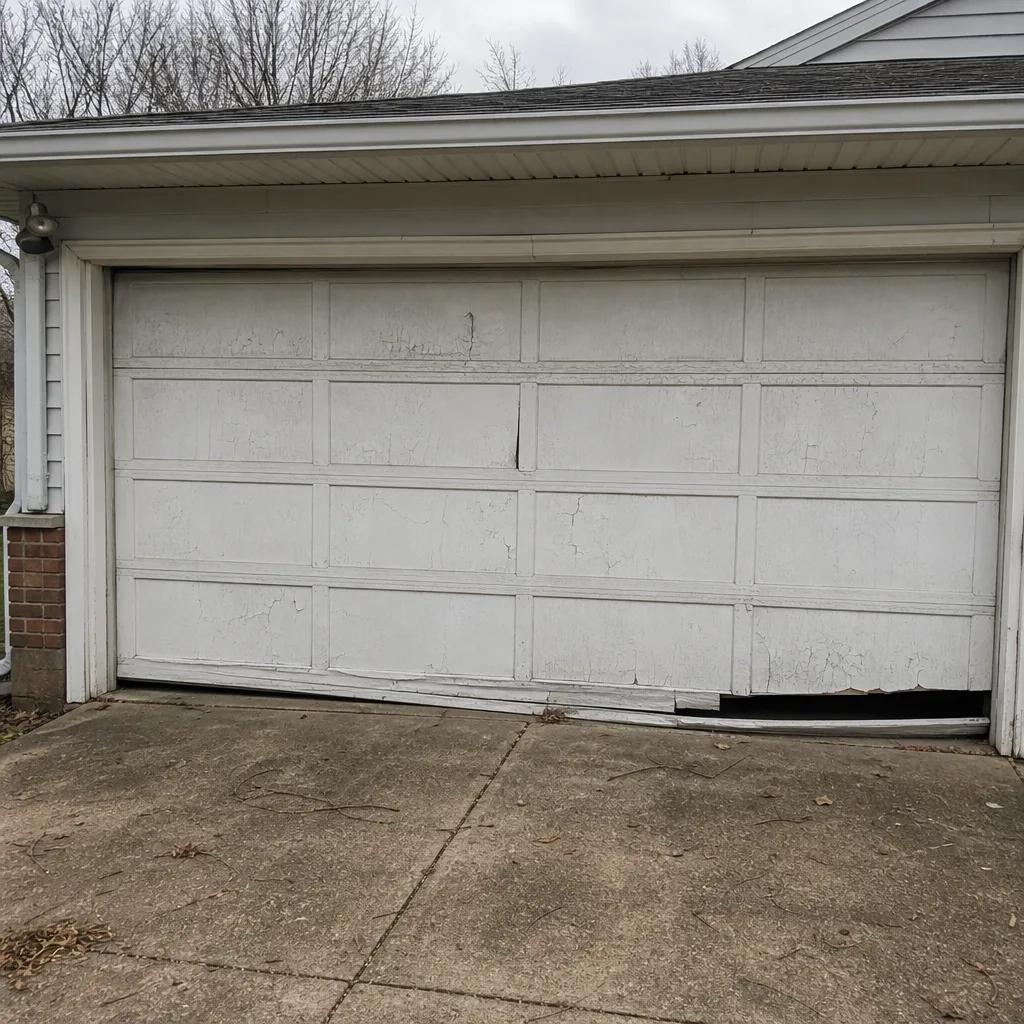 Before
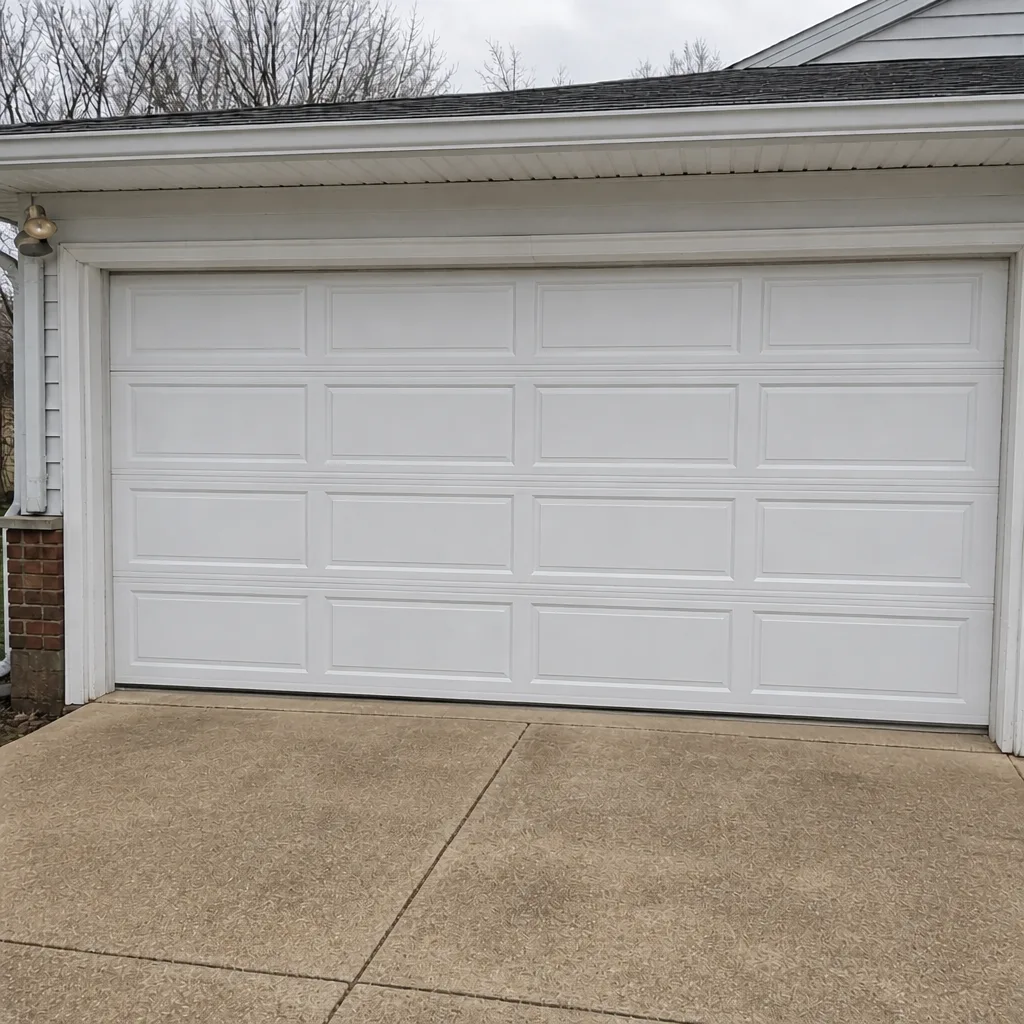 After
When to Call a Professional
Call a professional when the work involves stored energy or the door under load. Practically, that means a broken spring, a snapped or frayed cable, a door that’s come off its track, a door that’s crooked when it’s down, a door that reverses for no clear reason you’ve already ruled out sensors for, and any installation or full replacement. If your door is stuck open or stuck closed, that’s emergency garage door service; don’t wait on it. If an opener swap is beyond your comfort with the force and travel settings, that’s a call too. Dayton Garage Door Repair Co offers free estimates in Dayton, and we work on Raynor, LiftMaster, Chamberlain, Genie, Clopay, Amarr, Wayne Dalton, and Craftsman systems. Call (877) 704-1590.
Frequently Asked Questions
No, replacing a garage door torsion spring yourself is not safe for a typical homeowner. The spring is under heavy tension when wound, and a slip releases that stored energy almost instantly. A pro has the winding bars, the training, and the safety habits to release and reset the spring without putting anyone in its path. Call (877) 704-1590 for a free estimate.
You can safely handle lubrication, weatherstripping and bottom seal replacement, photo-eye sensor alignment, remote and keypad programming, and visual inspection. These deal with the door at rest and carry little risk. Anything involving springs, cables, tracks, or lifting the door off its hardware should go to a technician. We quote the price before any work starts, so you’ll know the cost up front.
It can, depending on the brand and the job. Warranty terms on Clopay, Amarr, and Wayne Dalton doors generally exclude failures traced to improper installation or repair, though you keep coverage on defects in materials. Maintenance items like seals and remotes are normally fine to handle yourself. A professional install gives you a clean record if a warranty question ever comes up.
Typical Dayton estimates run about $180 to $340 for a single torsion spring and about $360 to $680 for a matched pair, with cables often included depending on condition. Opener work and panel replacement depend on the brand and door model. These are estimates, the written estimate sets the final price, and we agree on it with you before work starts. Call (877) 704-1590 for your exact quote.
Often, yes, for common repair calls like springs, cables, and openers. We offer same-day service and free estimates, with fast dispatch from 7am to 7pm. Installation and replacement work is measured and scheduled rather than same-day, since the door and hardware have to be ordered for the right opening. Call (877) 704-1590 and we’ll tell you what’s possible.
Call a professional if the door won’t open or close, moves unevenly, reverses without an obvious sensor issue, makes a loud bang, or shows a frayed cable or a broken spring. Any of those involves the door under load and shouldn’t wait. If it’s just noisy or the seal is worn, that’s within DIY reach. When you’re unsure, a free estimate settles it.
The Bottom Line
The line between DIY and professional garage door work isn’t about difficulty. It’s about stored energy. Lubrication, weatherstripping, sensor alignment, and remote programming are safe, worthwhile DIY jobs that keep a Dayton door running. Springs, cables, track work, and installation belong to a trained technician because a mistake there damages more than a door. On cost, an opener swap is where DIY can pay off, spring and panel work is where it doesn’t. Handle the small maintenance, call for the rest, and keep your manufacturer warranty and your home insurance clean. We’re here when the door decides to stop cooperating.
Ready for an expert answer? Call Dayton Garage Door Repair Co at (877) 704-1590 for a free estimate. We repair, replace, and install garage doors and openers across Dayton, and we’ll tell you honestly whether a job can wait, whether you can handle it, or whether it needs a specialist in your garage.
Written by the team at Dayton Garage Door Repair Co.