Last updated November 21, 2026
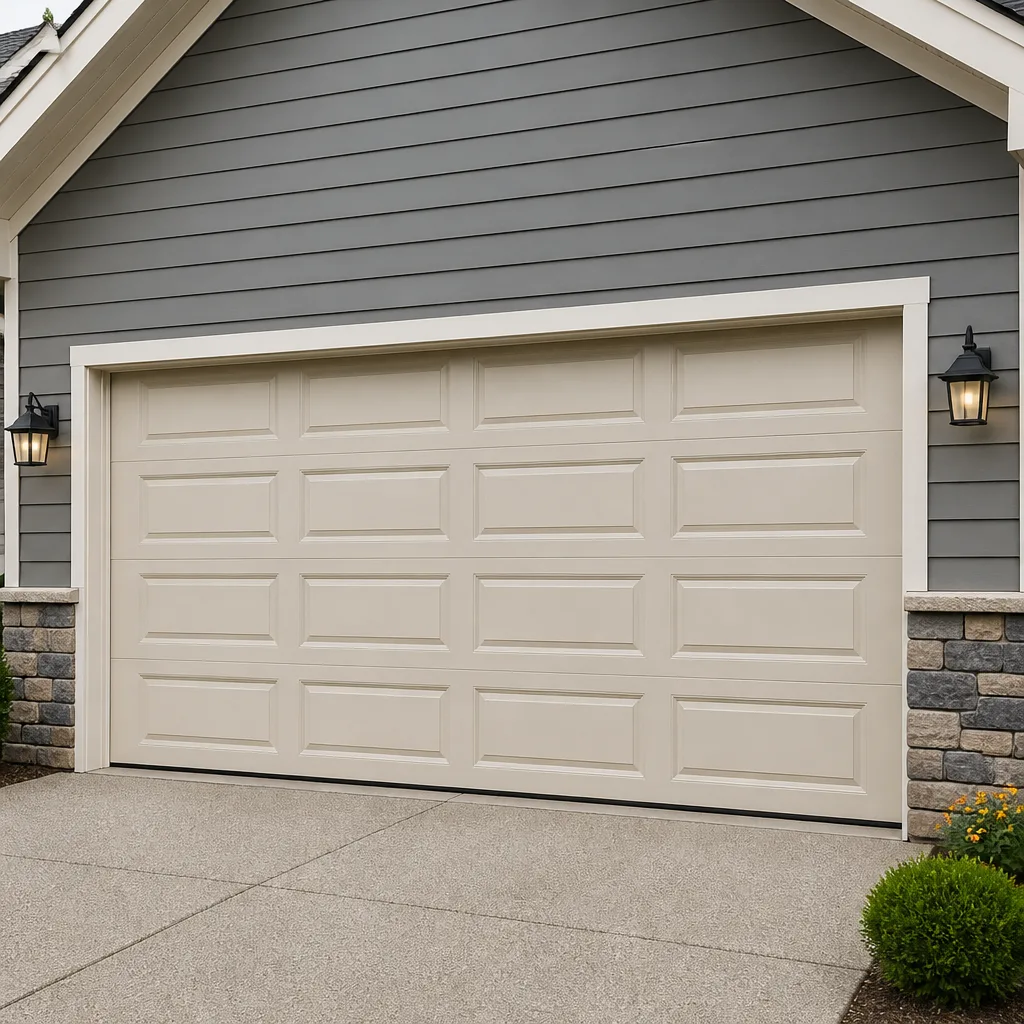 Raised-panel steel
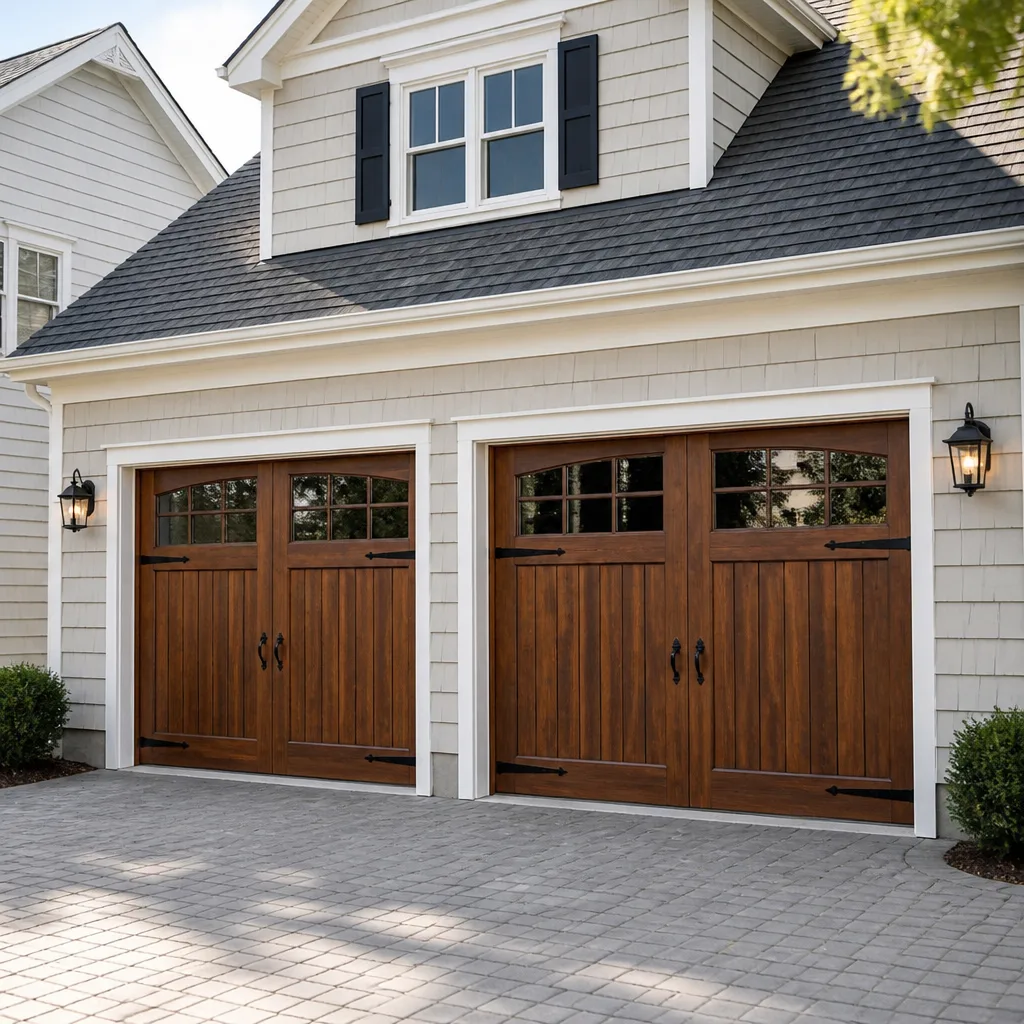 Carriage house
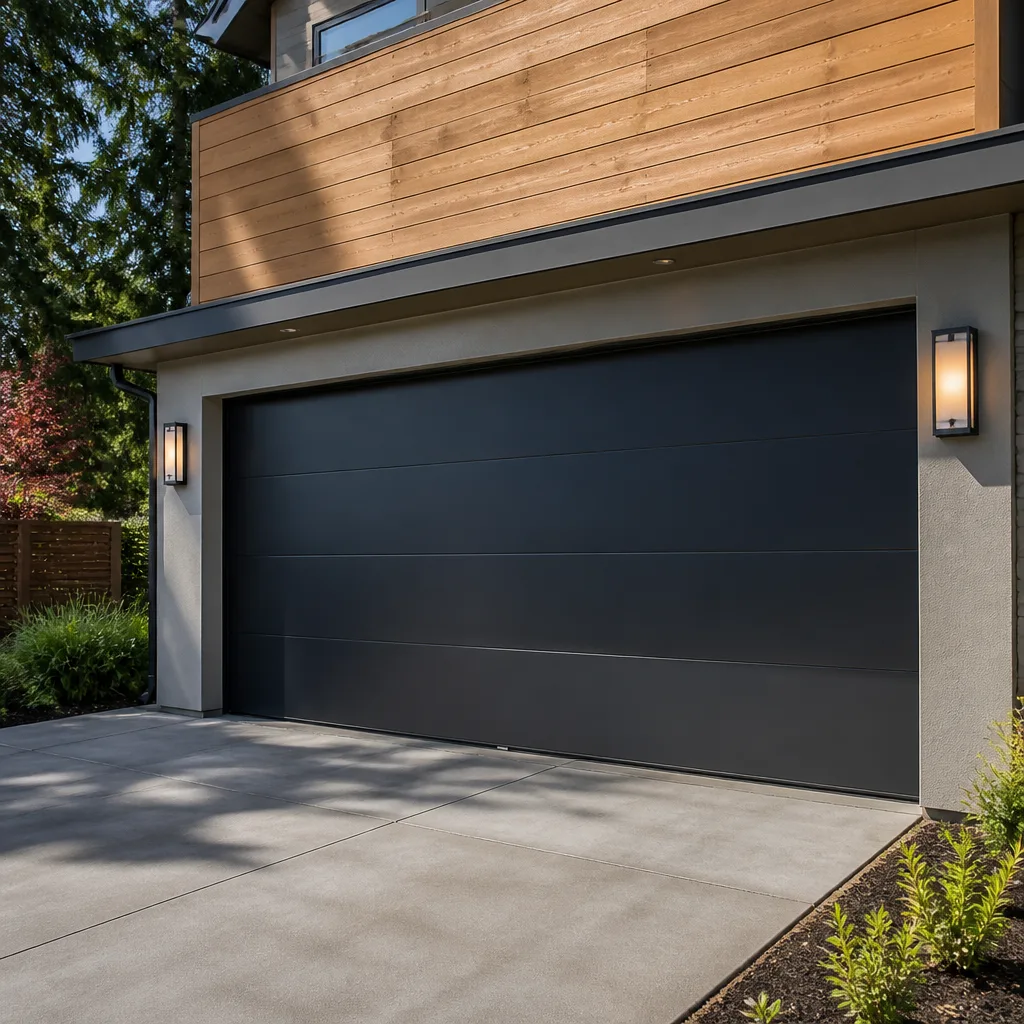 Modern flush
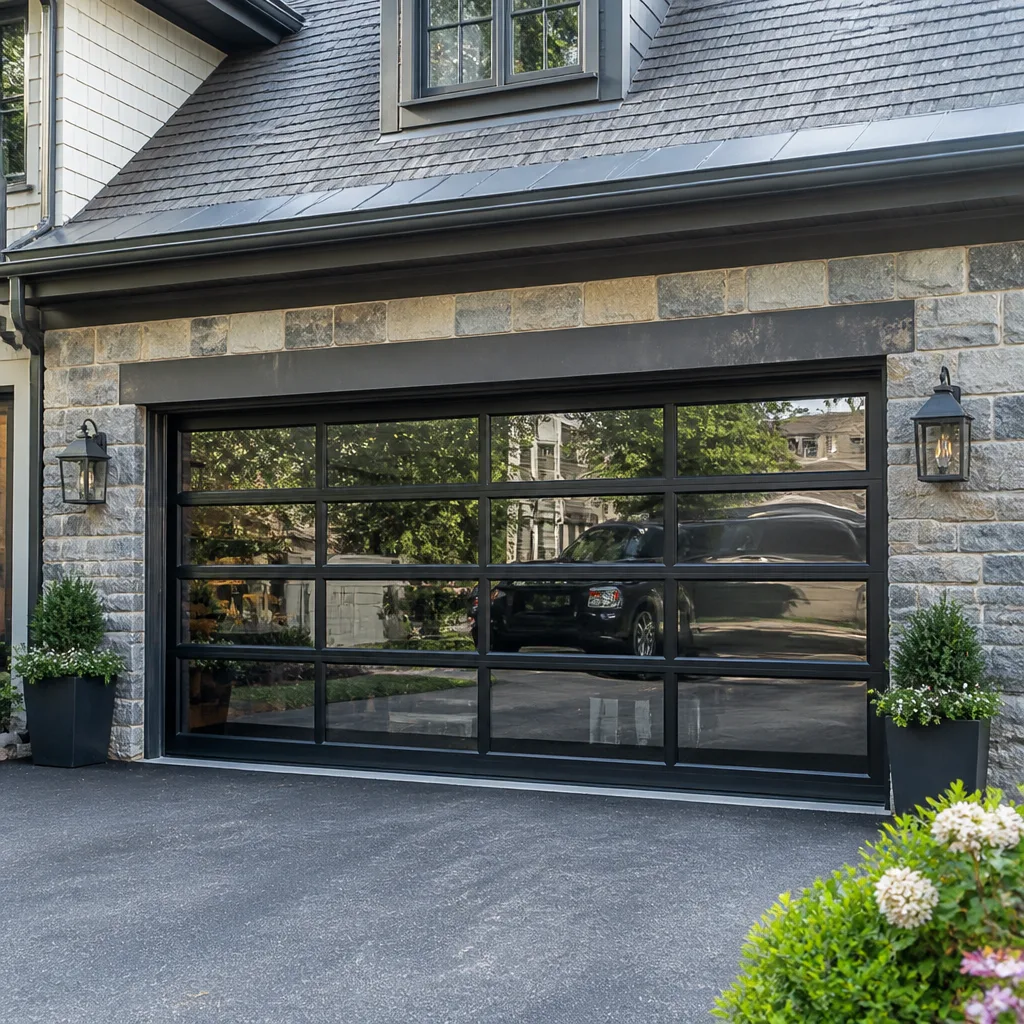 Full-view glass
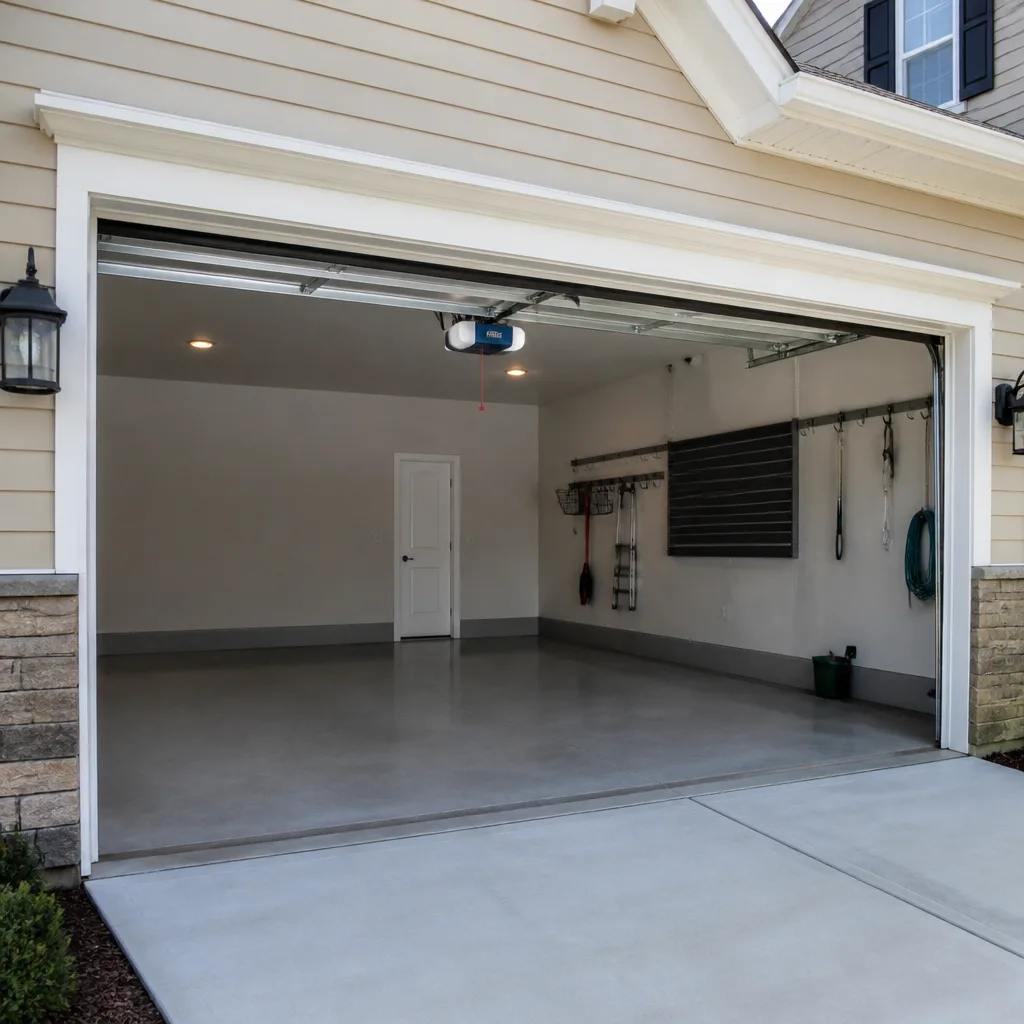 LiftMaster openers
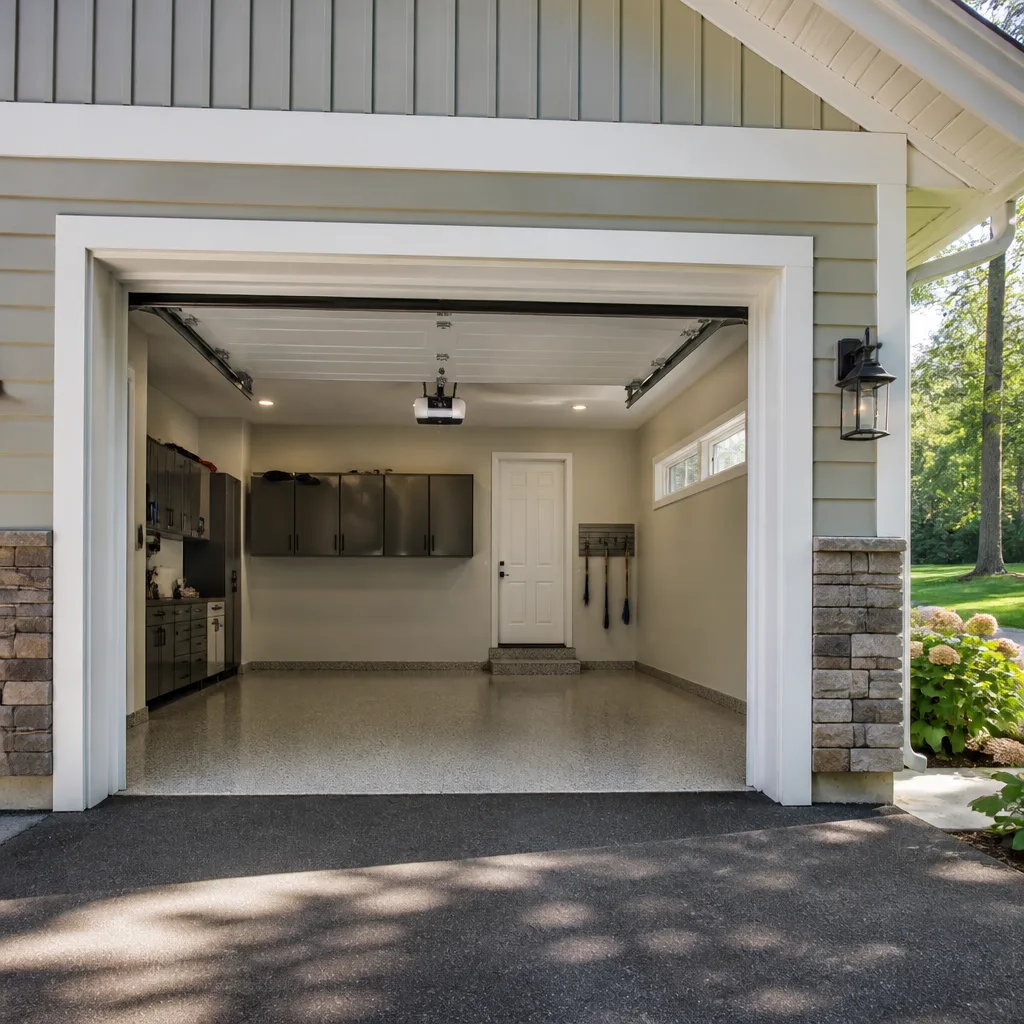 Chamberlain openers
Full 25-point door and opener safety check with every visit - springs, cables, rollers, tracks, and your LiftMaster or Chamberlain opener included
You get a price before we start. It does not change when the pro arrives.
Get your free estimateGarage Door Warning Signs: A Dayton Homeowner’s Reference Guide
A garage door that shudders slightly on the way down is a quirk most homeowners learn to live with. They shouldn’t. That specific symptom can point to a cable about to fail under load, and a door under spring tension is a heavy, high-energy machine. The useful skill isn’t memorizing a list of noises – it’s learning to sort what you’re seeing and hearing into three buckets: watch it, schedule service, or stop using the door right now. This guide gives Dayton homeowners that framework, from the sounds your door makes to the winter-specific clues that show up in this climate.
Styles & brands we work with
- Raised-panel steel
- Carriage house
- Modern flush
- Full-view glass
- LiftMaster openers
- Chamberlain openers
Quick Answer
Garage door warning signs fall into three severity tiers: monitor (minor squeaks, cosmetic panel wear), schedule service (grinding, slow opener travel, a door that reverses on its own), and stop use immediately (a snapped cable, a broken spring, or a door that shudders hard and drops). The tier tells you what to do next, not just what’s wrong. When in doubt, treat it as the higher tier and call a garage door specialist.
Table of Contents
- The Three-Tier Severity System
- Audio Diagnostics: What Each Sound Is Telling You
- Visual Inspection: Springs, Cables, Rollers and Tracks
- Opener Behavior That Signals a Door Problem
- Dayton Winter Warning Signs
- Stuck Open or Stuck Closed: What to Do
- The Safety Line: What You Should Never Touch
- When to Call a Professional
The Three-Tier Severity System
Most garage door advice on the internet is a flat list of symptoms with no ranking. That’s the problem – it treats a squeaky roller the same as a snapped torsion spring. At Dayton Garage Door Repair Co, we start every diagnosis by placing the symptom in one of three tiers. The tier drives the decision, and the decision is the point.
Tier 1: Monitor
These are cosmetic or minor issues that won’t strand you or endanger you. You can keep using the door while you schedule a routine visit.
- A light squeak or rub as the door travels
- Faded or dented panels that don’t affect the seal or the track
- A slightly sticky lock or a remote with a weak battery
- A gap under one corner of the bottom seal that doesn’t let in daylight
Tier 2: Schedule Service
The door still works, but something mechanical is wearing or beginning to fail. Don’t ignore these – the gap between Tier 2 and Tier 3 can close quickly.
- Grinding or scraping sounds during travel
- The opener travels noticeably slower, or pauses mid-cycle
- The door reverses before it reaches the floor
- A roller that wobbles in its bracket
- A track that has visibly bent or separated from the wall
Tier 3: Stop Use Immediately
These are safety failures. Stop using the door and call for same-day help – this is where our garage door repair service earns its keep.
- A torsion spring with a visible gap in its coil
- A cable that has snapped, frayed, or come off its drum
- A door that shudders hard and drops a few inches on the way down
- A door hanging at an angle, with one side lower than the other
- Loud popping followed by the door refusing to lift
The whole framework matters because the stakes are asymmetric. A monitored cosmetic issue costs nothing to leave for a few weeks. Misjudging a broken spring or a fraying cable as cosmetic can lead to serious injury. Sorting a symptom into the wrong tier is far more dangerous than sorting it into the right one.
Audio Diagnostics: What Each Sound Is Telling You
The sounds a garage door makes are diagnostic. Each noise maps to a specific mechanical source, and the source maps to a tier. Learning to hear the difference is the fastest route to knowing when to call.
Grinding
A grinding sound usually comes from metal-on-metal contact – worn rollers dragging in their tracks, or a torsion spring or bearing that’s losing lubrication. Grinding is Tier 2. It almost always gets worse, and the fix is comparatively cheap before it becomes a seized component. If the grind is coming from the opener itself, a LiftMaster or Genie unit that has stopped its smooth motor hum, it needs a trained eye at the motor, not just a spot of grease.
Popping
A single loud pop followed by a door that won’t lift is a classic broken spring. Repeated smaller pops can also mean a torsion spring is winding up unevenly. Either way, treat popping as Tier 3 and stop using the door.
Slapping
A slapping or flapping sound, often toward the bottom of the door, usually points to a loose bottom seal, a loose hinge, or a panel that has come slightly out of its rail. Slapping is Tier 2 – it can loosen fasteners over time, and a loose panel under tension is a hazard.
Squealing
High-pitched squealing is typically a roller bearing or the opener motor itself. If the squ
See the difference
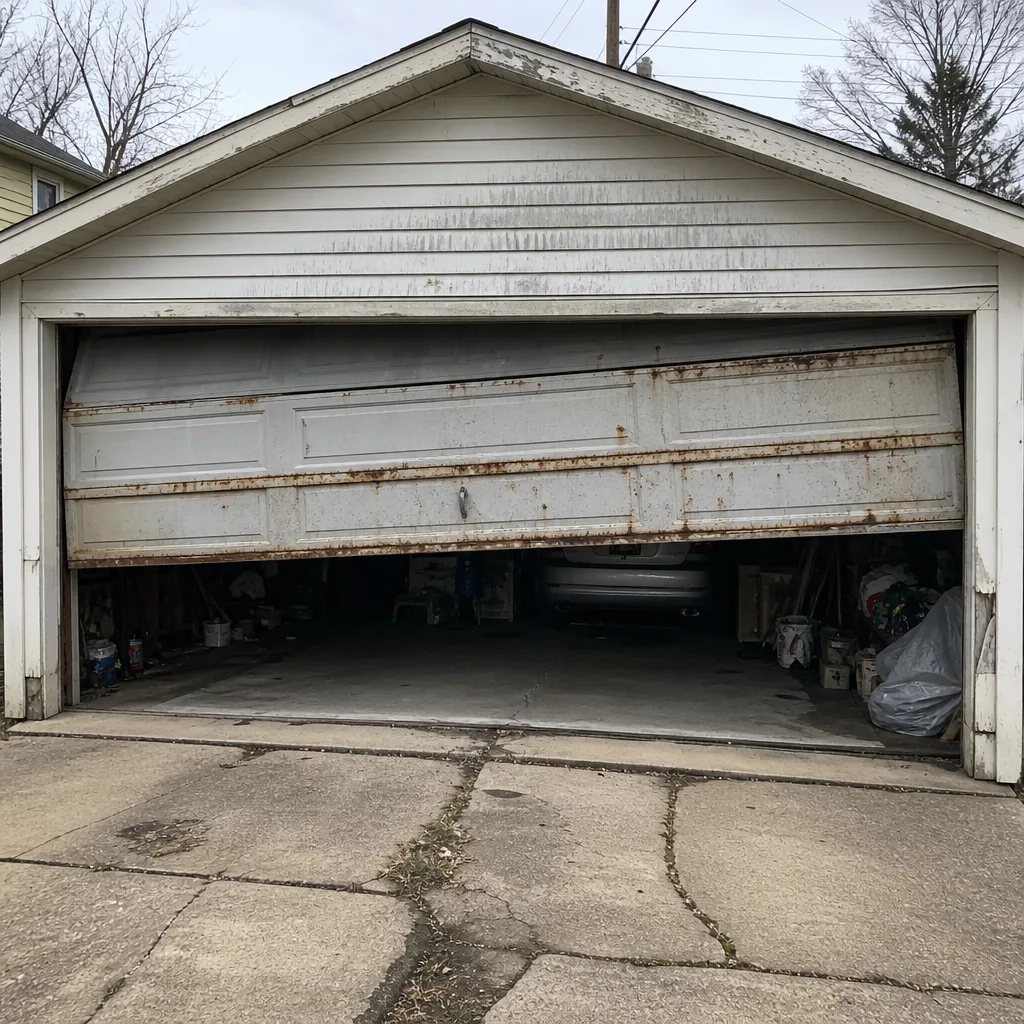 Before
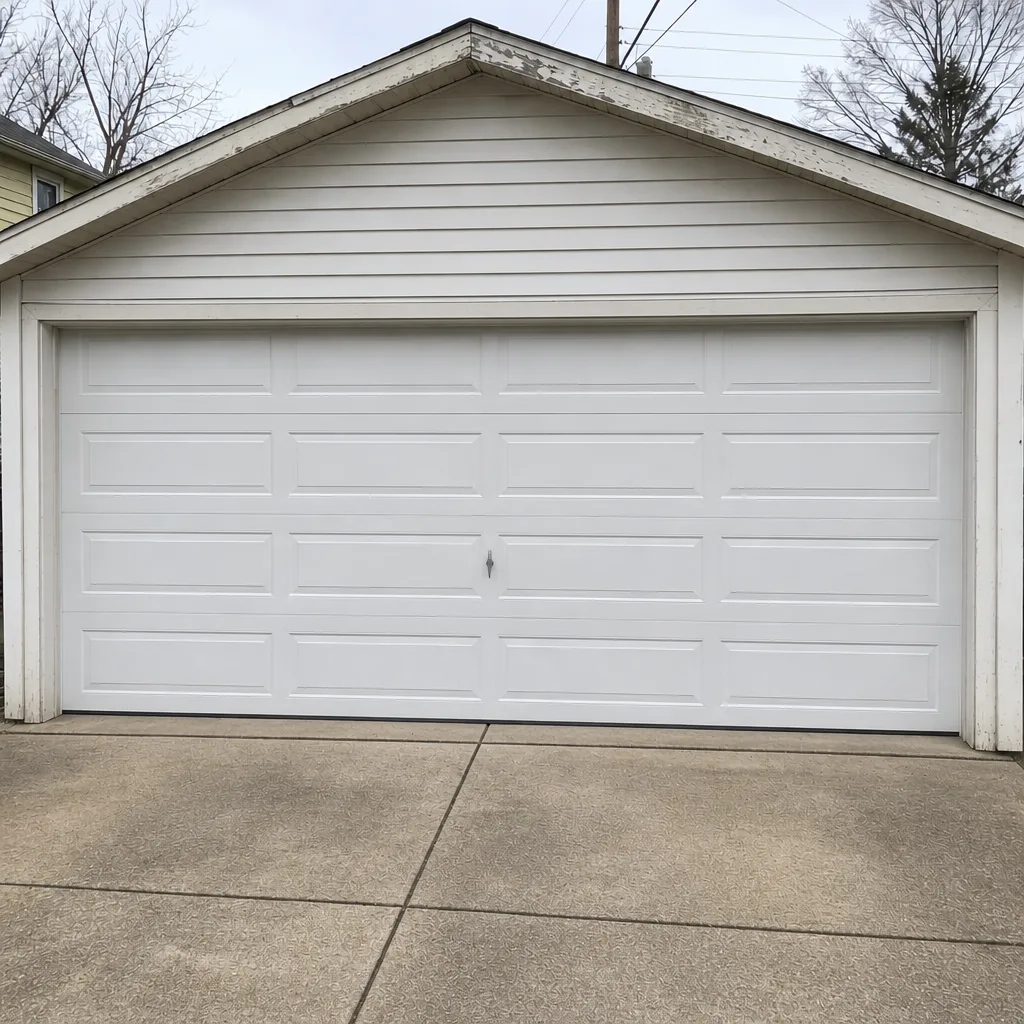 After
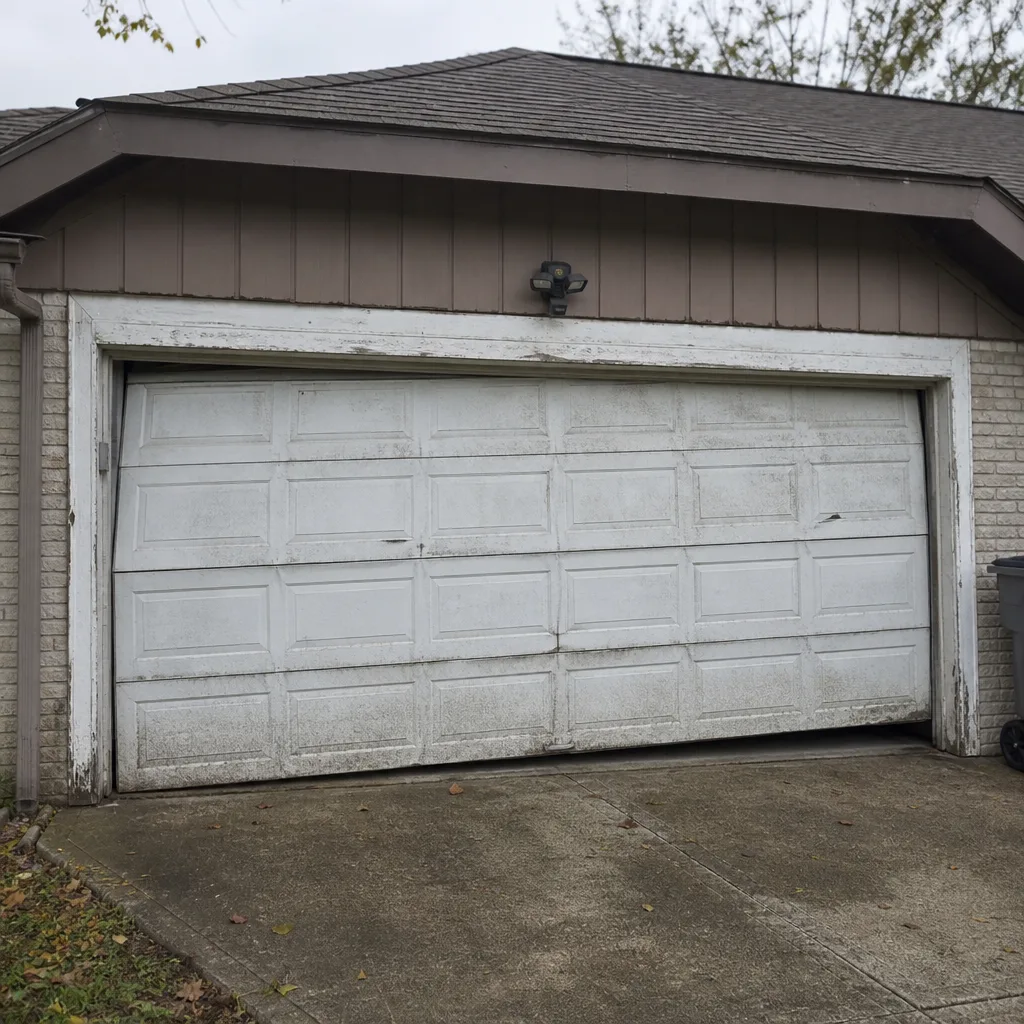 Before
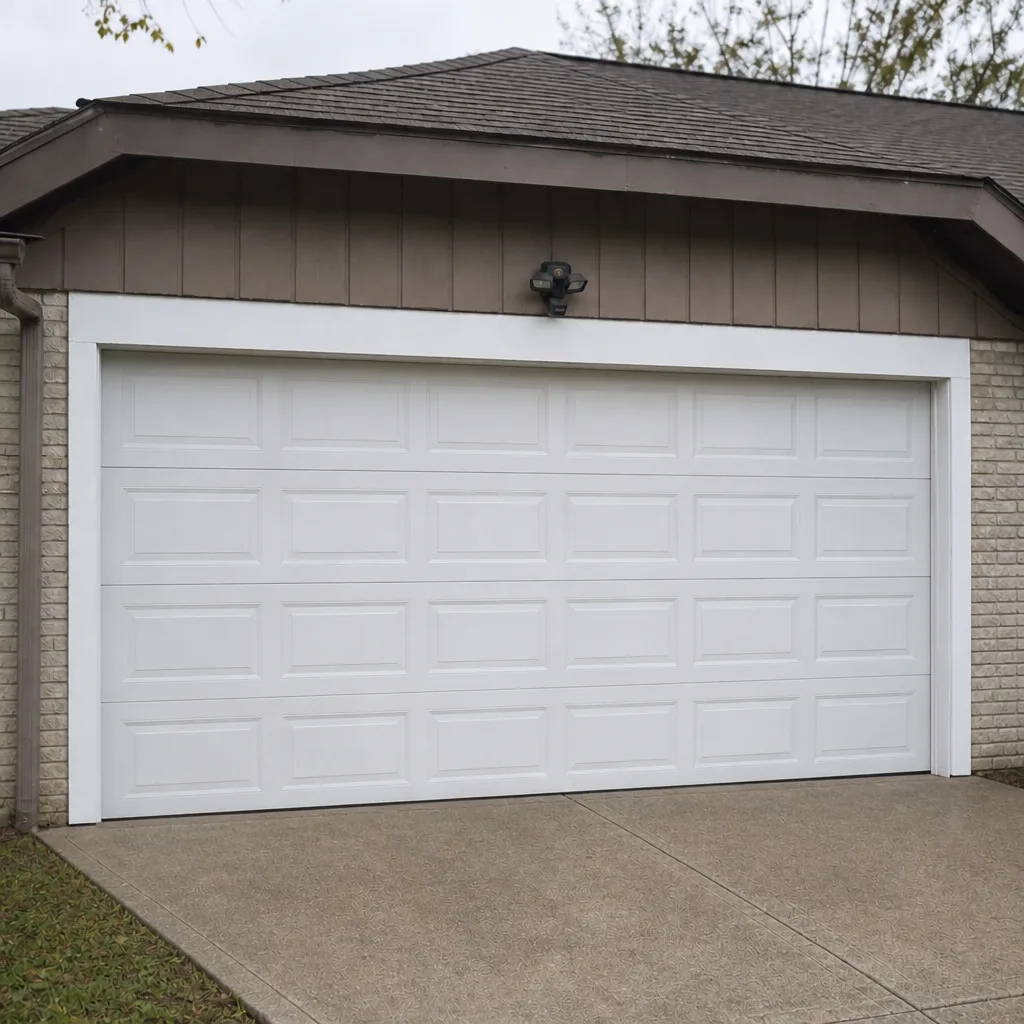 After
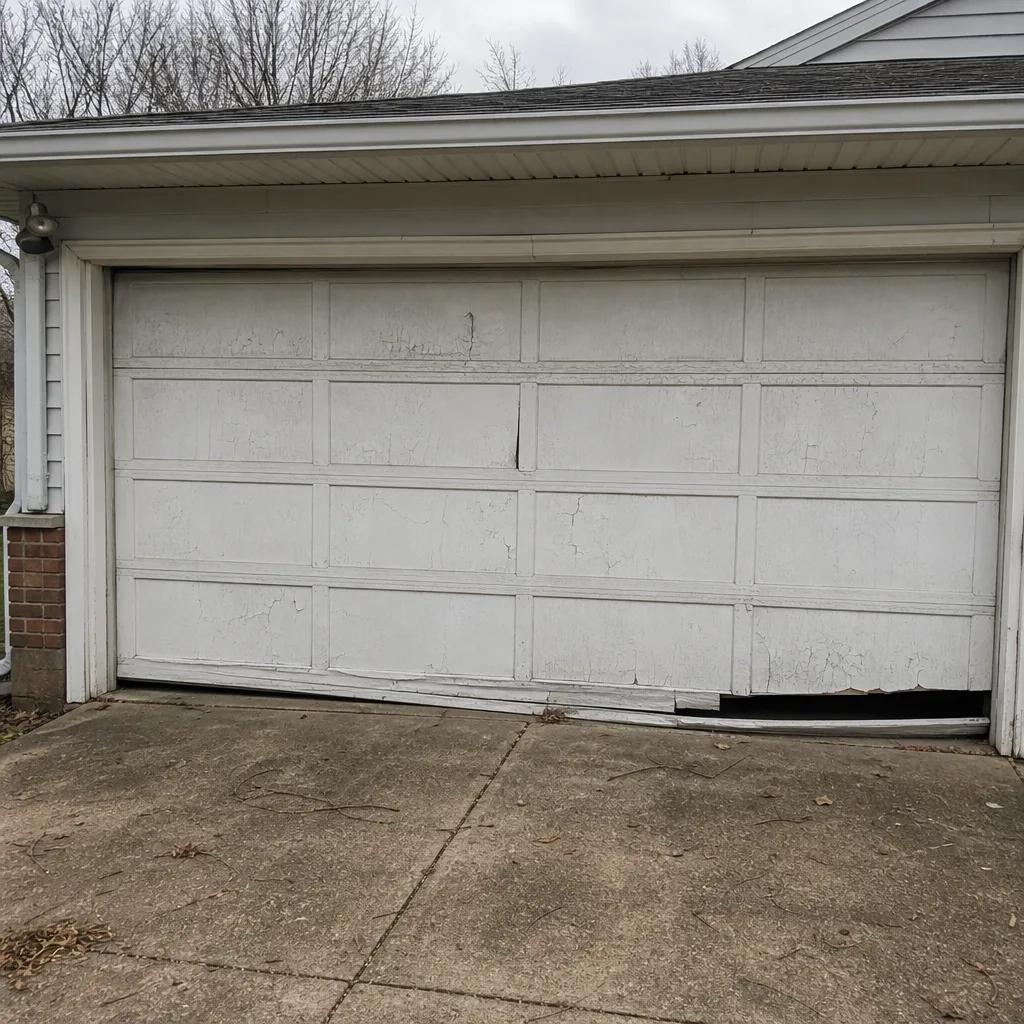 Before
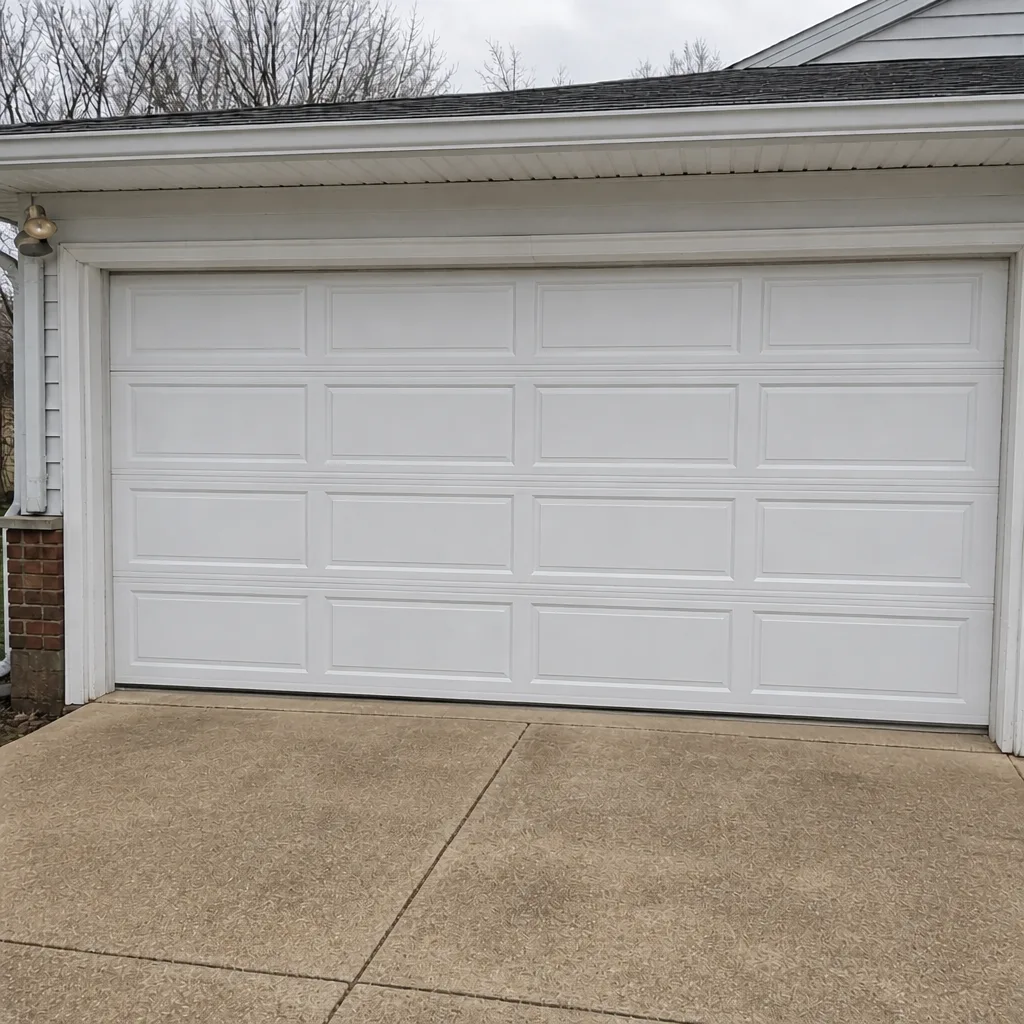 After