Last updated November 21, 2026
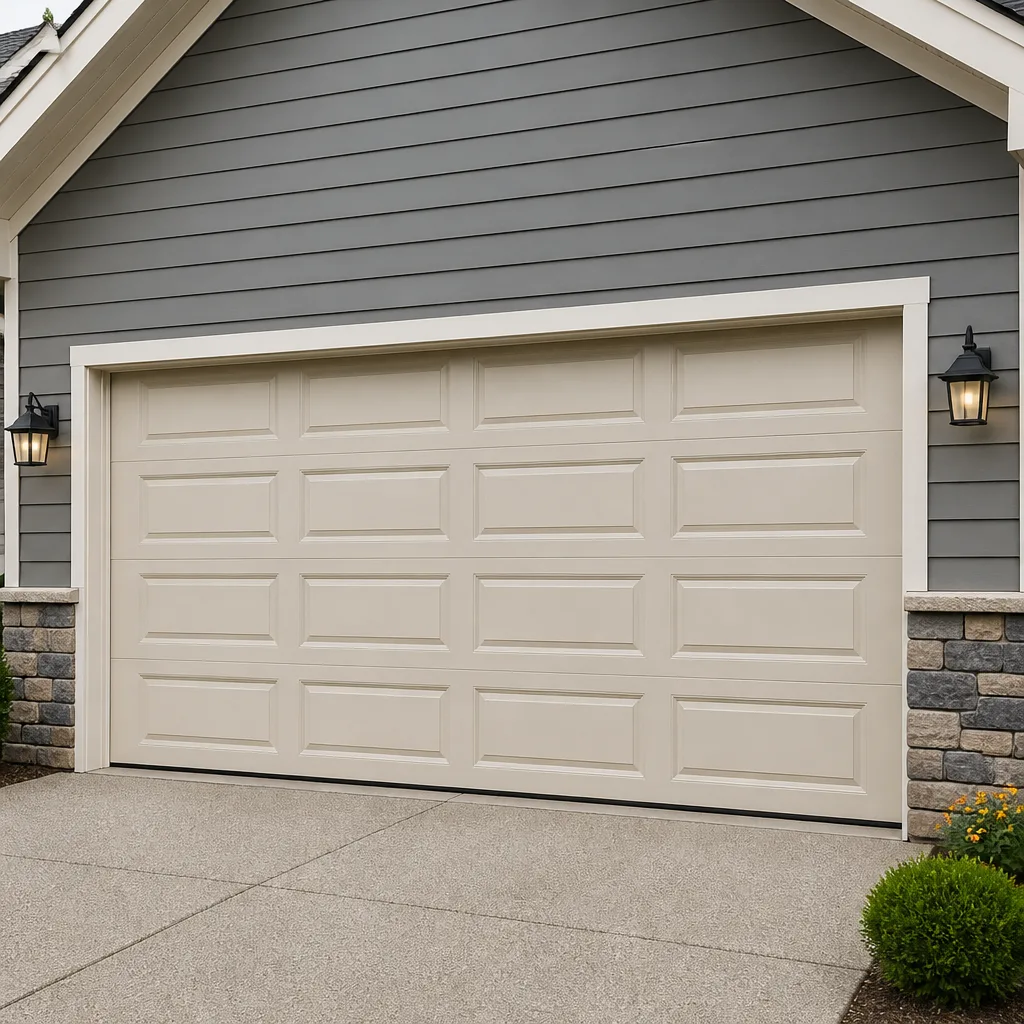 Raised-panel steel
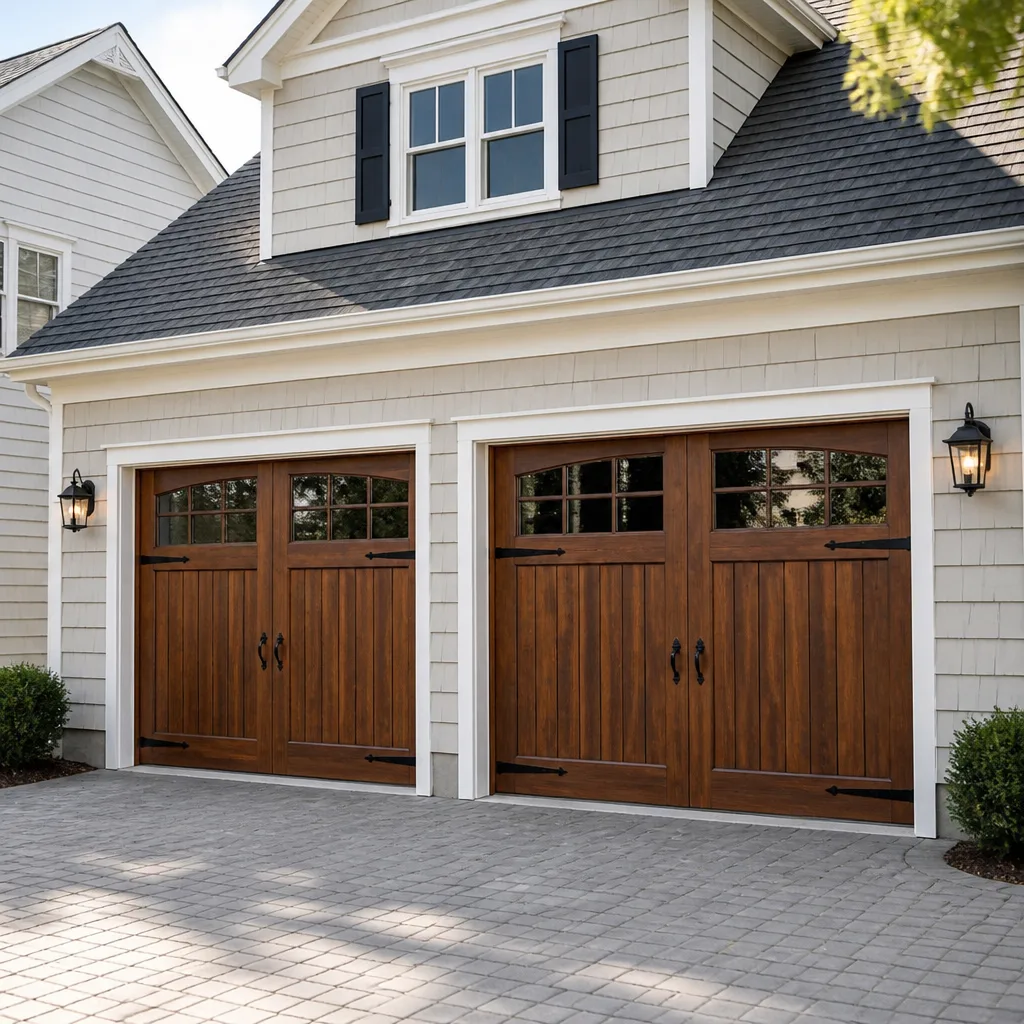 Carriage house
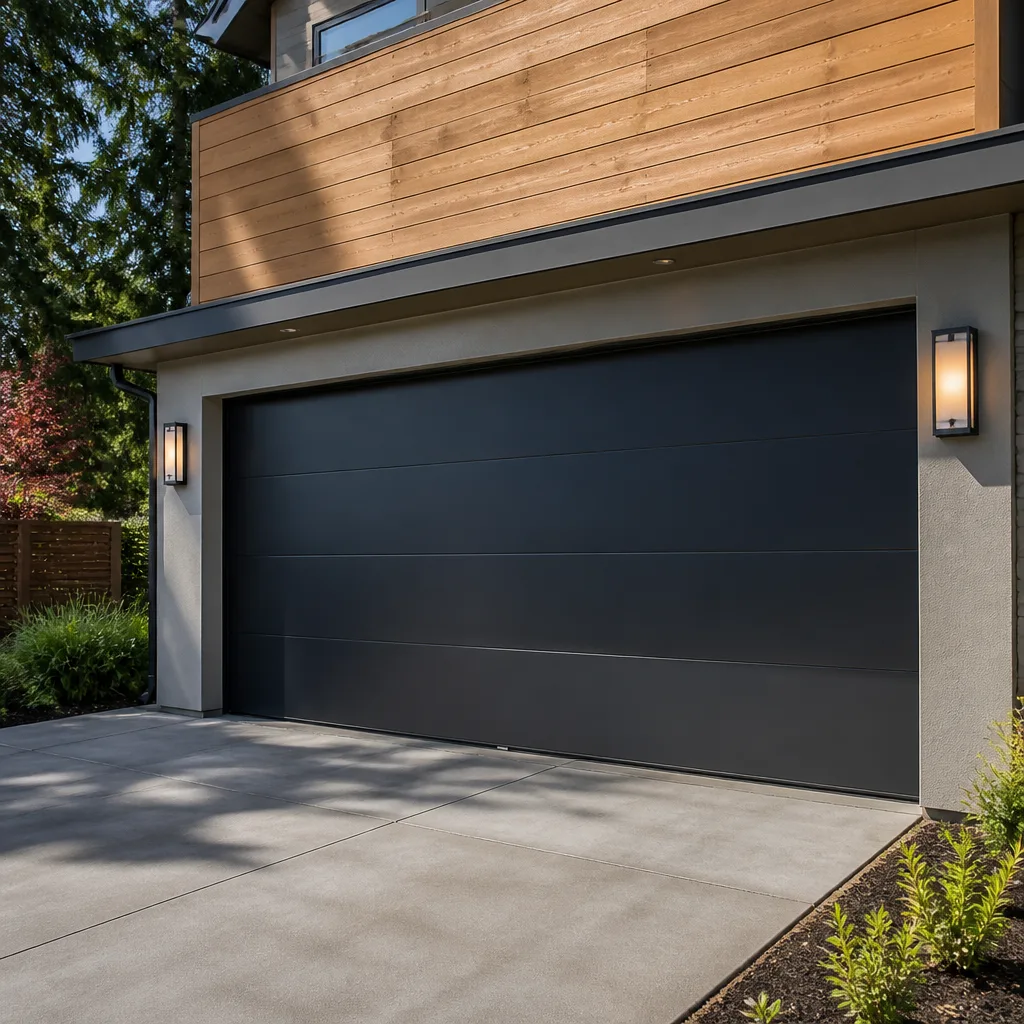 Modern flush
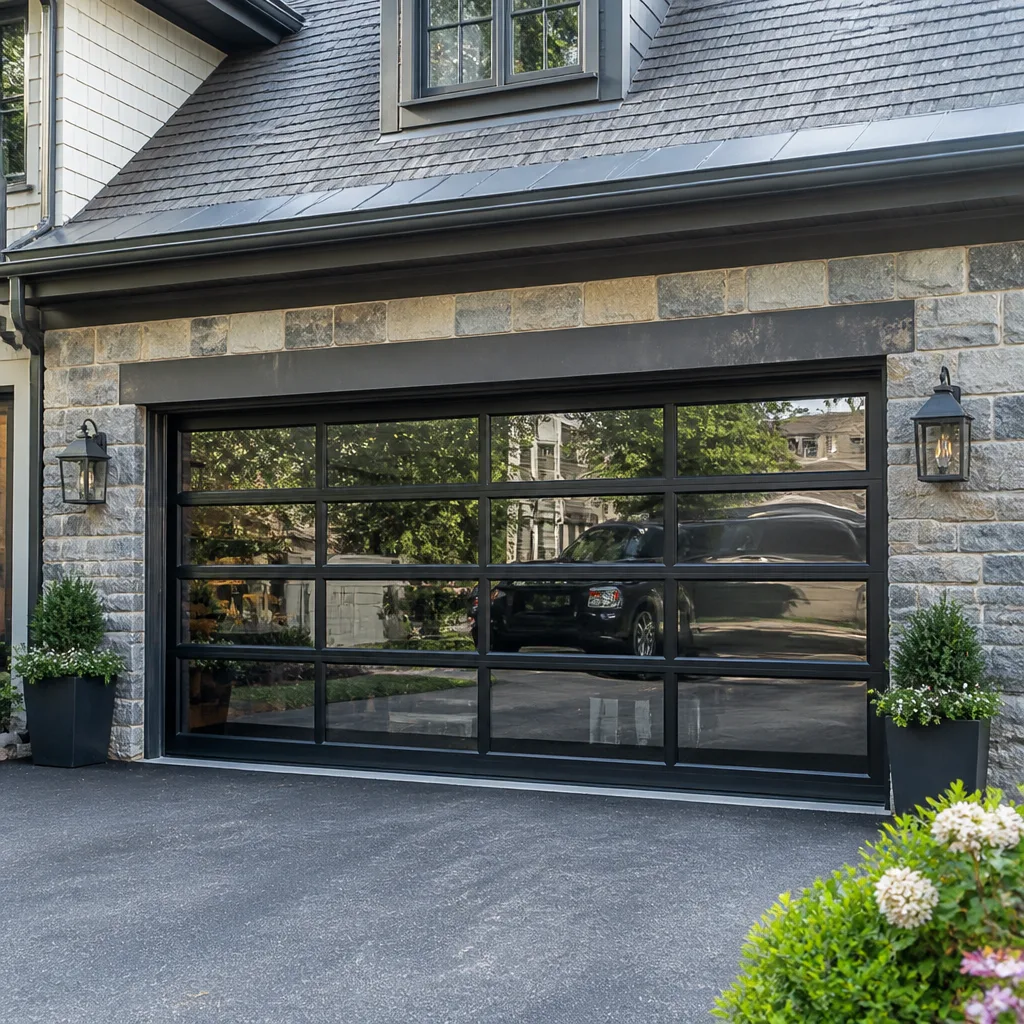 Full-view glass
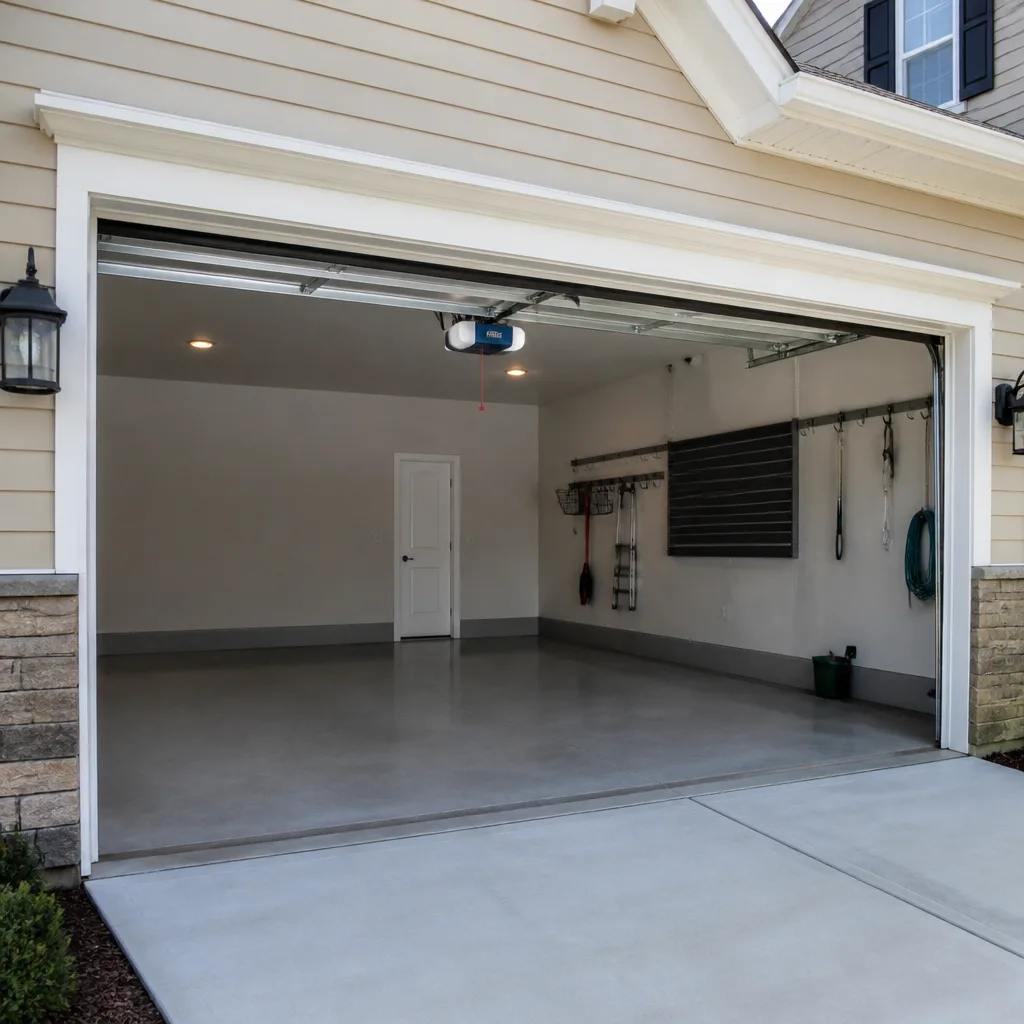 LiftMaster openers
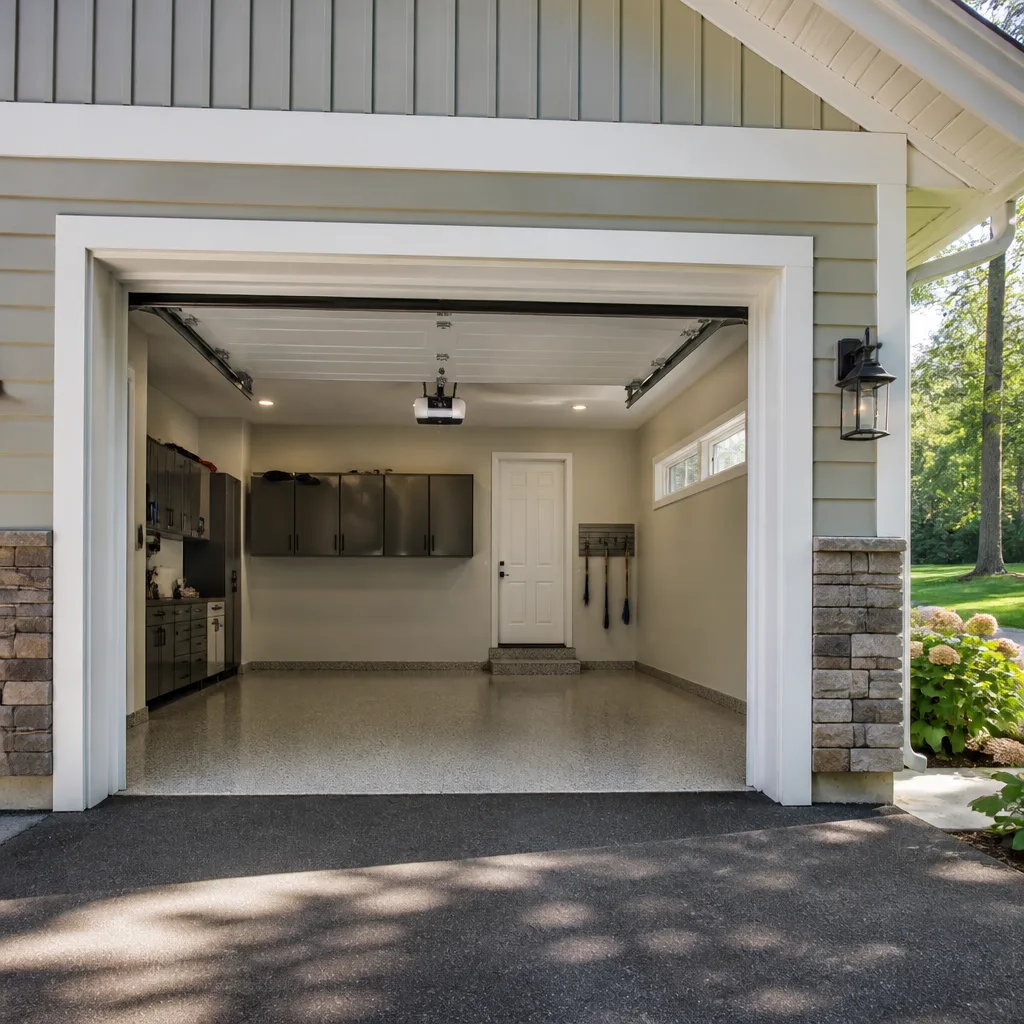 Chamberlain openers
Full 25-point door and opener safety check with every visit - springs, cables, rollers, tracks, and your LiftMaster or Chamberlain opener included
You get a price before we start. It does not change when the pro arrives.
Get your free estimateThe Complete Guide to Garage Doors in Dayton
Most homeowners assume a garage door fails suddenly. It doesn’t. It fails slowly, over years, through hundreds of small cycles that wear down springs, dry out seals, and loosen hardware until one cold morning the whole system gives out. Dayton sits in a climate that accelerates that wear. The freeze-thaw swings between December and March are hard on torsion springs and bottom seals, and the humid summers work on wood and steel alike. The houses matter too: much of the housing stock in Dayton went up between 1940 and 1980, which means a lot of doors are running on hardware that was never built to last this long.
This guide walks through the full lifecycle of a garage door in Dayton, from choosing materials that survive the local weather to spotting a failing spring before it snaps, to reading a door’s history when you’re buying a house. It’s written for homeowners who want to understand what’s actually happening in their garage, not just get a sales pitch.
Quick Answer
A garage door in Dayton typically lasts 15 to 30 years for the door itself and 7 to 12 years for the springs, though the local freeze-thaw cycle can shorten spring life considerably. The most common failures are broken torsion springs, worn bottom seals, and opener motor or sensor problems. Choosing the right material for Dayton’s humidity and temperature swings, keeping up with lubrication and balance checks, and knowing when a repair is worth it versus a replacement are the three decisions that matter most.
Styles & brands we work with
- Raised-panel steel
- Carriage house
- Modern flush
- Full-view glass
- LiftMaster openers
- Chamberlain openers
Table of Contents
- How Dayton’s Climate Affects Your Garage Door
- Which Door Materials Hold Up Best in Dayton?
- HOA Rules in Dayton Suburbs: What You Can and Can’t Install
- The Eight Brands on Most Dayton Driveways
- A Maintenance Routine That Matches Dayton Weather
- Reading a Garage Door’s History in a Resale Home
- Repair or Replace? Making the Call
- What Garage Door Installation Involves in Dayton
How Dayton’s Climate Affects Your Garage Door
Dayton’s weather is the single biggest factor in how long garage door components last. The region gets hot, humid summers and cold winters with repeated freeze-thaw cycles, and that combination hits two parts of the door harder than anything else: the springs and the bottom seal.
Torsion springs are steel under constant tension. Every time the door opens and closes, the spring flexes. In a climate with wide temperature swings, the metal expands and contracts with the seasons, and that cycling adds stress on top of the normal open-close wear. A spring that might last 12 years in a mild, stable climate can fatigue faster in Dayton because it’s working through temperature extremes that a drier or more moderate region never sees. Extension springs, common on older doors, face the same problem plus the added risk of stretching unevenly as the seasons change.
The bottom seal is the other casualty. That rubber or vinyl strip along the bottom of the door is what keeps cold air, moisture, and pests out of the garage. Through a Dayton winter, the seal freezes to the concrete, gets pulled each time the door opens, and thaws again. Repeat that a few hundred times and the seal cracks, flattens, or tears away from the door. A worn bottom seal lets in drafts, raises heating costs if the garage is attached, and lets water pool under the door where it can work on the concrete and the door’s bottom panel.
What does this mean practically? In Dayton, spring and seal inspections matter more than they would in a milder climate. We recommend checking both twice a year: once in late fall before the freeze sets in, and once in spring after the thaw. That timing catches the damage the local weather does before it turns into a bigger repair.
What the Freeze-Thaw Cycle Does Over Time
It’s not one winter that breaks a door. It’s the accumulation. Each freeze-thaw cycle moves the concrete under the door slightly, which changes how the seal contacts the floor. Each temperature swing works the springs a little more. Hardware screws back out from vibration and thermal movement. By the time a door is 15 or 20 years old in Dayton, it’s usually on its second or third set of springs and has had the bottom seal replaced at least once. That’s normal wear for this climate, not a sign of a defective door.
Why Humidity Matters Too
Dayton’s summers are humid enough that moisture is a real factor for wood and steel doors. Wood absorbs moisture and swells, then dries and shrinks, which can warp panels and crack paint. Steel doors with a compromised finish can rust at the bottom edge where moisture collects. We’ll cover material choices in the next section, but the short version is that the local climate rewards doors with good moisture resistance and punishes ones that were never sealed properly.
Which Door Materials Hold Up Best in Dayton?
Material choice is the decision that determines how much maintenance a door needs in Dayton and how long it lasts. There’s no single best answer, because the right material depends on your budget, your home’s style, and how much upkeep you’re willing to do. Here’s how the three main options perform locally.
Steel: The Most Common Choice, With Caveats
Steel is what most Dayton homeowners end up with, and for good reason. It’s affordable, it holds paint well, and it handles temperature swings without warping. The catch is rust. Steel doors are protected by a factory finish, but if that finish gets scratched or chipped, moisture gets to the bare metal. In a humid Dayton summer, a chip on the bottom panel can turn into rust within a season or two. The fix is simple: touch up scratches promptly and keep the bottom edge clean and dry. Steel with a good finish and basic maintenance holds up well here.
Composite: The Low-Maintenance Option
Composite doors, usually made from a mix of wood fibers and polymers, are built to resist moisture. They don’t swell, rot, or rust the way wood and steel can, which makes them a good fit for Dayton’s humidity. They look like wood and hold paint or stain well. The trade-off is cost, since composite runs higher than basic steel, and some composites can fade over years of strong summer sun. If you want the wood look without the upkeep the local climate demands, composite is worth the premium.
Wood: Beautiful but Demanding in This Climate
Wood doors are the most attractive option and the most demanding in Dayton. The same humidity that makes composite appealing makes wood a maintenance commitment. Wood absorbs and releases moisture with the seasons, which means it needs a proper sealer and regular refinishing to keep it from warping and cracking. If you love the look and don’t mind the upkeep, wood can last a long time. If you want a door you can mostly ignore, wood in Dayton will disappoint you.
Quick Comparison
- Steel: Best value, low maintenance if the finish is kept intact, watch for rust at the bottom edge.
- Composite: Best moisture resistance, wood-like appearance, higher upfront cost.
- Wood: Best appearance, highest maintenance, needs regular sealing against local humidity.
We install all three, and the right answer usually comes down to how much maintenance the homeowner wants to take on. If you’re replacing an aging door, garage door installation gives you the chance to match material to how the door will actually live in Dayton’s weather.
HOA Rules in Dayton Suburbs: What You Can and Can’t Install
If you live in one of Dayton’s suburbs with a homeowners association, the door you can install is often decided before you ever pick a material. HOA rules in places like Oakwood, Centerville, and Beavercreek commonly restrict three things: color, window placement, and panel style. Understanding those rules before you buy saves you from installing a door the association then asks you to change.
Color is the most common restriction. Many Dayton-area HOAs require doors to be painted in a color that matches or closely complements the home’s exterior, and some specify an approved palette drawn from neutral tones. Painting a bold color on a door in a deed-restricted community is the fastest way to get a letter from the association.
Window placement and style come up just as often. Some HOAs limit windows to the top panel or a specific row, and some restrict certain window patterns. If you want a door with decorative windows, confirm the allowed configuration before ordering, because changing window layout after the door is built isn’t simple.
Panel style restrictions are less common but real in some associations. A raised-panel door may be required where a flush or carriage-house style isn’t allowed, or the reverse. Some historic districts, including parts of Oakwood with architectural review, have stricter guidelines that treat the garage door as part of the home’s visible facade.
How to Check Before You Buy
- Request the current architectural guidelines from your HOA or architectural review committee in writing.
- Confirm the approved colors, window configurations, and panel styles for garage doors specifically.
- Ask whether the association requires approval before installation or only reviews after the fact.
- Keep the written approval on file before ordering the door.
We’ve worked with homeowners across these suburbs, and the pattern is consistent: the households that check first have a smooth installation, and the ones who order first and ask later end up reordering. If you’re in a deed-restricted community in Centerville or Beavercreek, build in a little time to get the association’s sign-off before the door is ordered.
The Eight Brands on Most Dayton Driveways
Walk any residential street in Dayton and you’ll see the same handful of manufacturers over and over. After years of repair work, we’ve learned the typical failure points for each of the eight brands that fill most residential garages here: LiftMaster, Chamberlain, Genie, Clopay, Amarr, Wayne Dalton, Craftsman, and Raynor. Knowing the brand tells us a lot about what we’re likely to find before we open the toolbox.
The four door manufacturers and four opener brands don’t fail the same way. Door brands differ in panel construction, spring type, and hardware quality. Opener brands differ in motor design, logic boards, and sensor systems. Here’s what tends to go first on each after a decade or more in a Dayton garage.
Door Manufacturers
- Clopay: A very common sight on Dayton driveways. Panels hold up well, but older steel models show rust at the bottom edge where moisture collects, and torsion springs are the typical first failure.
- Amarr: Solid construction; the usual issues are worn rollers, frayed cables, and springs that have cycled through many Dayton winters.
- Wayne Dalton: Some models use proprietary hardware, so replacing a broken roller or hinge can mean sourcing the right part. We keep familiar with their line for exactly that reason.
- Raynor: Well-built doors; when something goes it’s usually the springs or the opener that was paired with the door, not the panels themselves.
Opener Brands
- LiftMaster: Reliable motors. Failures usually trace to worn gears, a dead capacitor, or a safety sensor knocked out of alignment.
- Chamberlain: Sold alongside LiftMaster and shares much of the same design. Logic board and sensor problems are the common repairs.
- Genie: Common on older Dayton homes. Motor and gear wear, plus remote and safety-sensor issues, are what we see most.
- Craftsman: Many are rebadged units built on the same platforms as Chamberlain openers, so the failure patterns are similar: sensors, boards, and gears.
That brand familiarity is the reason we can often tell you what’s wrong before we arrive. If a door is paired with a LiftMaster opener and the door won’t respond, we’re thinking sensors or logic board first. If it’s a Wayne Dalton door with a broken torsion spring, we know the hardware configuration we’re dealing with. When the opener is the problem, our garage door opener repair work covers the motor, remotes, and sensors together, because the opener and the door are one system, not two.
A Maintenance Routine That Matches Dayton Weather
A garage door doesn’t need much attention, but the small amount it does need has to account for the local climate. The routine below is built around Dayton’s freeze-thaw swings and humid summers. Most of it you can do yourself with a visual inspection. The one part you should never tackle alone is anything involving the springs, cables, or other high-tension parts.
Seasonal Checklist
- Late fall (before the freeze): Inspect the bottom seal for cracks or a loose edge, and clear leaves and debris from the door’s travel path. Lubricate hinges, rollers, and the spring with a garage-door lubricant, not household oil.
- Monthly (simple visual): Look at the springs, cables, and rollers. Watch for fraying, rust, or a gap in a spring’s coil. Check that the safety sensors at the bottom of the tracks are aligned and the indicator lights are on.
- Spring (after the thaw): Re-check the bottom seal, since winter is when it takes the most abuse. Test the door’s balance by disconnecting the opener and lifting the door halfway by hand. A balanced door stays put; one that drifts down or up needs adjustment.
- Summer (humidity check): For wood doors, inspect the finish for cracks and reseal as needed. For steel doors, touch up any scratches or chips before rust sets in.
What Not to Do Yourself
Torsion springs and the cables under them store a huge amount of energy. A torsion spring under tension can cause serious injury if it releases unexpectedly, which is why spring repair is one of the most safety-critical jobs in the trade and why many general handymen decline it. We don’t recommend homeowners adjust, lubricate under tension, or replace springs themselves. Watch the springs for warning signs and call a specialist for anything that involves them. The same goes for the cables and the brackets that hold them.
Routine lubrication, seal inspection, and sensor alignment are safe homeowner tasks. Spring, cable, and track bracket work is not. If something looks off in those areas, garage door repair is the right call rather than a weekend project. Our technicians have up to 10 years of experience, and even they treat spring work with care, because the parts are unforgiving.
Reading a Garage Door’s History in a Resale Home
If you’re buying a home in Dayton, the garage door tells you more about the house’s maintenance history than almost any other feature. A door that’s been cared for looks and sounds a certain way, and a neglected one gives itself away. Learning to read those signals helps you spot a coming repair before you make an offer.
What to Look For
- Spring condition: A gap in the coil, a rusted spring, or a spring that looks newer than the door all tell you something. A mismatched new spring on an old door can mean a past repair, which is fine, but ask what was replaced.
- Bottom seal: A flattened, cracked, or missing seal is a cheap fix but a sign the door hasn’t been maintained. In Dayton, a torn seal often means it’s been through several winters without attention.
- Panel alignment: Gaps between panels, a door that sits unevenly, or visible dents suggest impact damage or a bent track.
- Opener age and type: Ask how old the opener is. A very old unit paired with a newer door is a future expense. Check that the safety sensors work by testing the door’s reverse function.
- Noise and operation: Open and close the door during your showing. Squealing, grinding, or a door that jerks indicates worn rollers, dry hinges, or a failing opener. A well-maintained door moves smoothly and quietly.
- Brand and model: Note the manufacturer. A Clopay or Amarr door with a LiftMaster or Chamberlain opener is a common, serviceable combination. Unusual brands may make parts harder to source.
If you find a door in rough shape, factor a repair or replacement into your offer. A new door is a known cost, not a mystery, and it’s easier to negotiate before closing than after. If you’re unsure, have a specialist look at it during your inspection window so you know exactly what you’re buying.
Repair or Replace? Making the Call
The repair-or-replace decision comes down to three questions: how old is the door, what’s broken, and how much of the door or system is affected. A single broken spring is a repair. A door that’s 25 years old, rusting through two panels, with a failing opener, is usually a replacement.
Repair Is Usually the Right Call When…
- Only one component has failed (a spring, a roller, a sensor, a remote).
- The door is structurally sound with aligned panels and a straight track.
- The opener is working and just needs a part replaced.
- The door is under about 15 years old and has been maintained.
Replacement Makes More Sense When…
- The door has rust-through, rot, or multiple damaged panels.
- The springs have been replaced multiple times and the hardware is generally worn.
- The opener is old and the door needs new hardware anyway.
- You want a material or style change, or your HOA requires a different door.
- The door no longer fits the home, or safety features (like auto-reverse) don’t work and can’t be economically restored.
Pricing for both paths varies by job, so we give every homeowner a written estimate in advance. There’s no cost surprise once work begins, because the quote is agreed before anyone touches the door. Replacement work is measured and scheduled, so it’s a separate timeline from repair. If you’re leaning toward replacing an aging or damaged door, we can walk you through the options during a free measure.
What Garage Door Installation Involves in Dayton
Installation is a different job from repair, and it’s worth understanding the process before you buy. Whether you’re replacing a door that’s reached the end of its life or installing one on new construction, the steps are similar, and the local climate and HOA rules from earlier sections come into play at the front end.
The Steps
- Measure and plan: We measure the opening, check the headroom and side clearance, and confirm the material and style. If you’re in an HOA community, this is where the approval comes in.
- Order the door: Doors are built to size and specification, so there’s an ordering lead time. This is why installation is measured and scheduled rather than same-day.
- Remove the old door and hardware: The old door, springs, and track come down, and any damaged framing is addressed.
- Install the new track and hardware: Track, rollers, springs, and cables go up. Spring installation is the safety-critical step and is handled by trained technicians.
- Hang the door and balance it: The door goes on, gets balanced, and is adjusted so it opens smoothly by hand before the opener is connected.
- Connect and test the opener: The opener is installed and the safety sensors and auto-reverse are tested. We walk through the operation with you before we leave.
Most installations are completed in a day once the door arrives, but the schedule depends on lead time and the specifics of your opening. If your existing opener is fine and the door is new, we can often reuse it; if the opener is old or mismatched to the new door, we’ll tell you so you can plan for it in the same visit. That’s the practical benefit of having the door and the opener handled together: one measure, one installation, one system you know is compatible. You can see the main services on our Dayton Garage Door Repair Co page.
Common Mistakes to Avoid
- Tackling a spring repair alone. Torsion springs are under extreme tension and can injure you badly in an instant. This is one repair for a trained specialist, not a homeowner project, even if a video makes it look manageable.
- Ignoring a failing bottom seal through winter. In Dayton, a cracked seal lets the freeze-thaw cycle pull the door out of alignment and push water onto the floor. Replacing the seal before the first freeze saves a bigger repair later.
- Ordering a door before checking HOA rules. A door that violates the color, window, or panel rules in Oakwood, Centerville, or Beavercreek can mean reordering at your own cost. Get the written approval first.
- Assuming a noisy door is “just old.” Squealing and grinding usually mean dry hinges, worn rollers, or a failing opener. Lubrication and a quick inspection catch it before it escalates.
- Choosing material on price alone. A cheap steel door that rusts in two summers costs more over time than a composite door that survives the local humidity. Match the material to your maintenance appetite.
- Trying to service a broken opener yourself. Logic boards, capacitors, and safety sensors should be handled by someone who knows the brand. A wrong diagnosis wastes money and can leave the door unsafe.
- Buying a resale home without testing the door. Open and close it during the showing, check the springs and seal, and factor any repair into your offer before closing.
See the difference
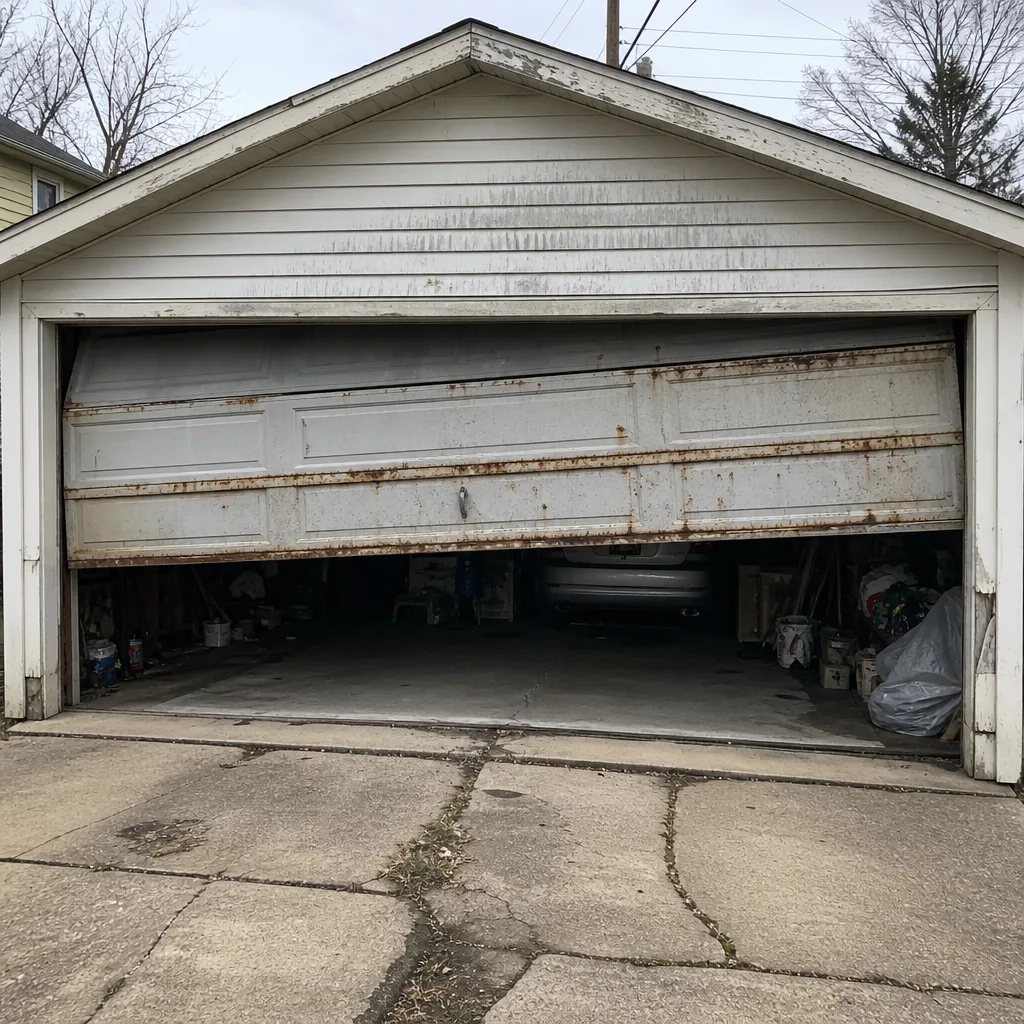 Before
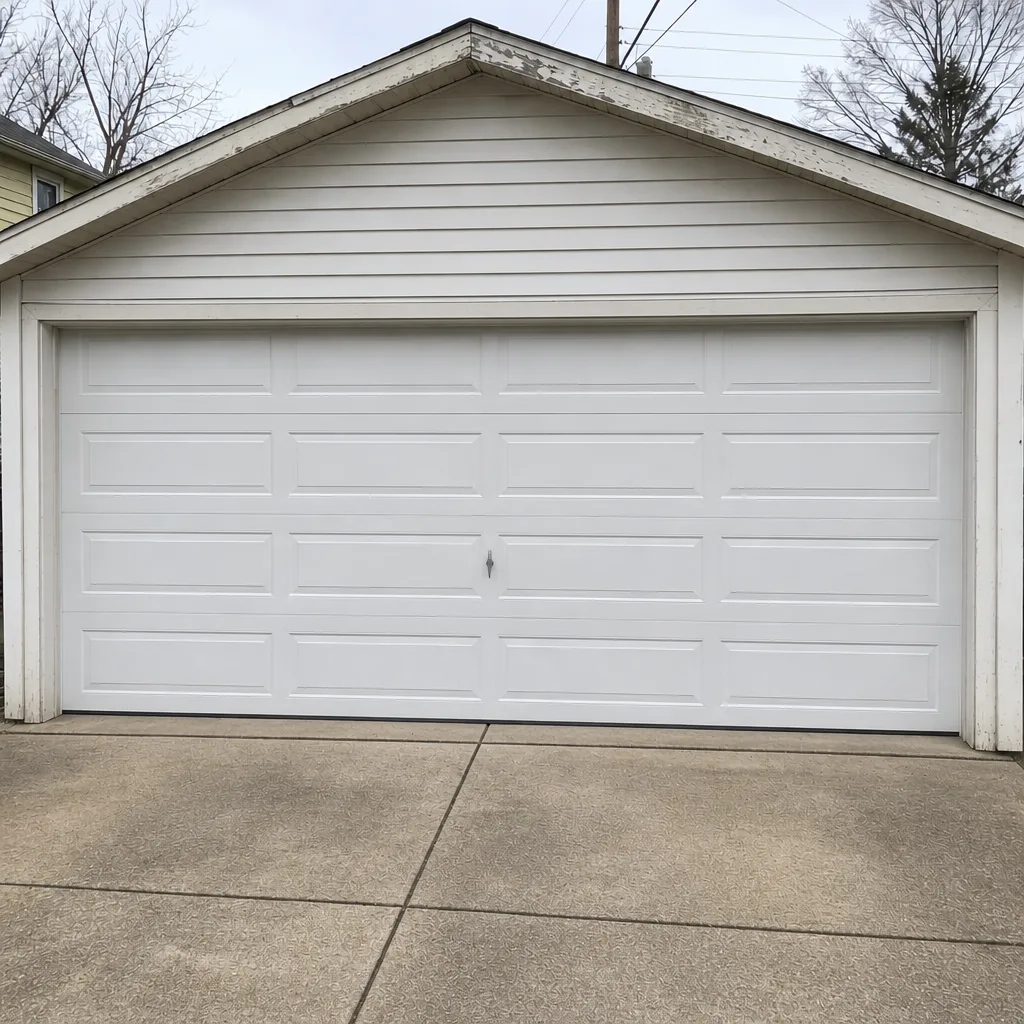 After
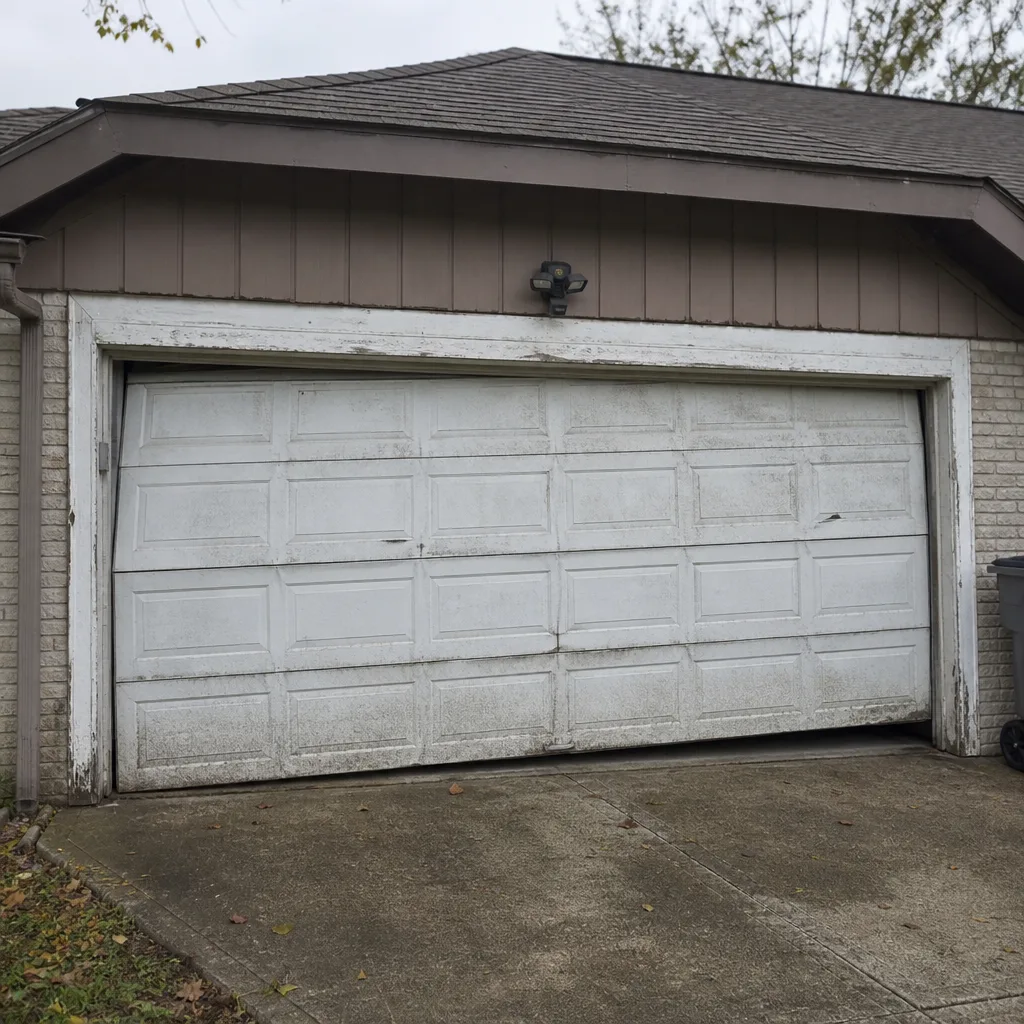 Before
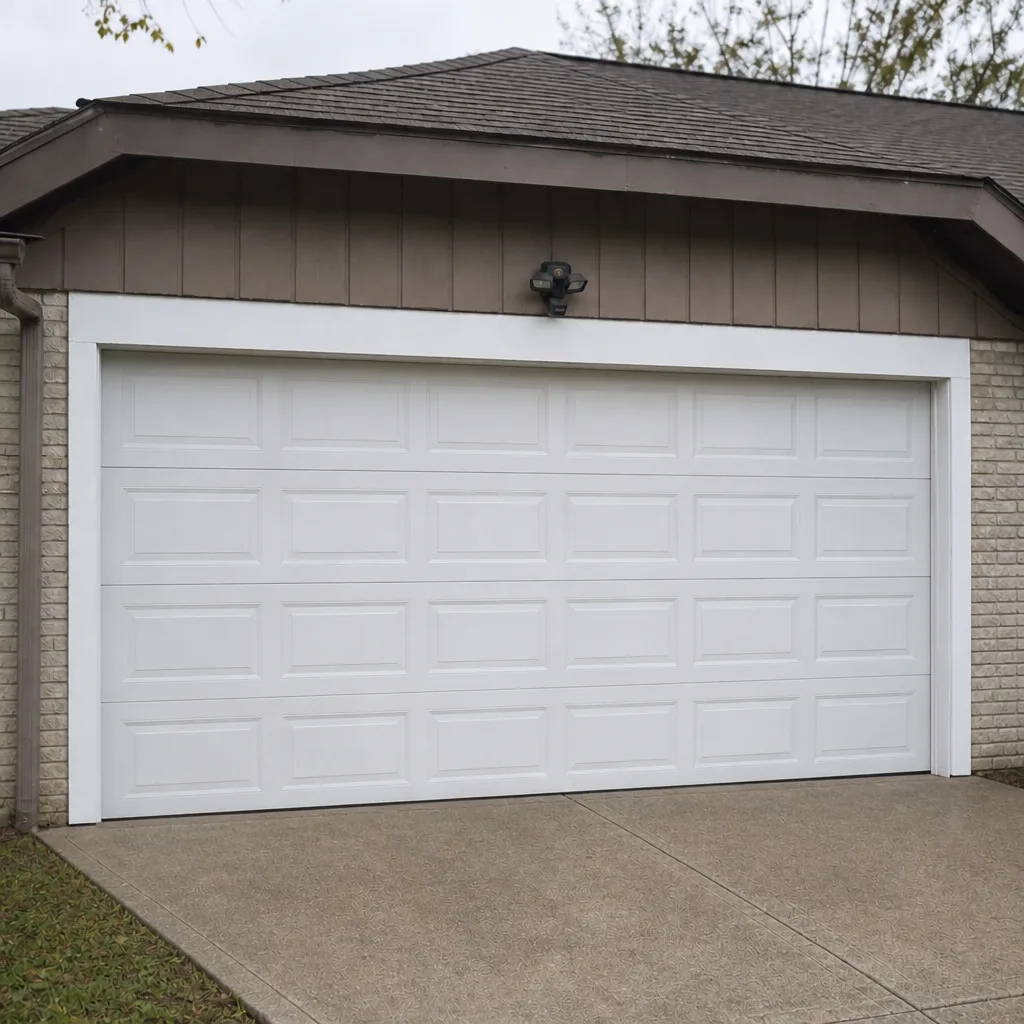 After
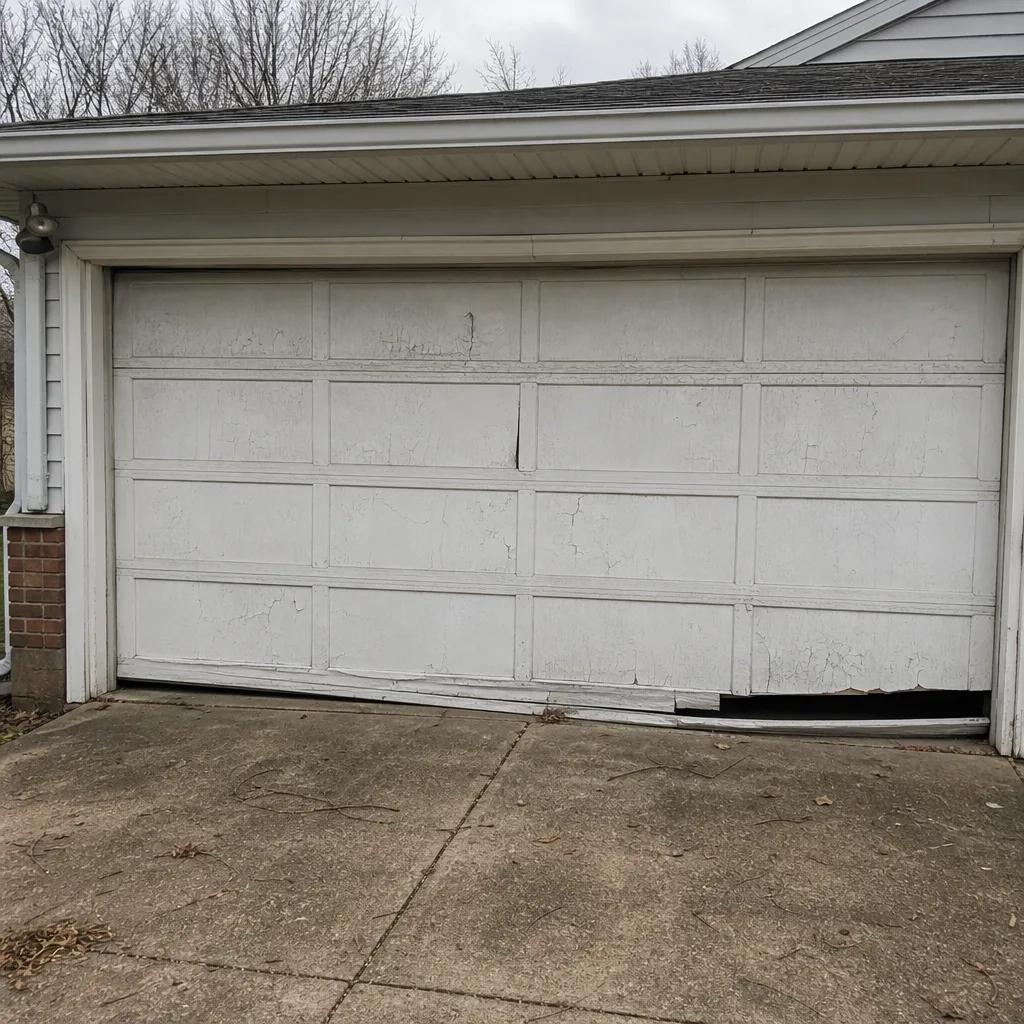 Before
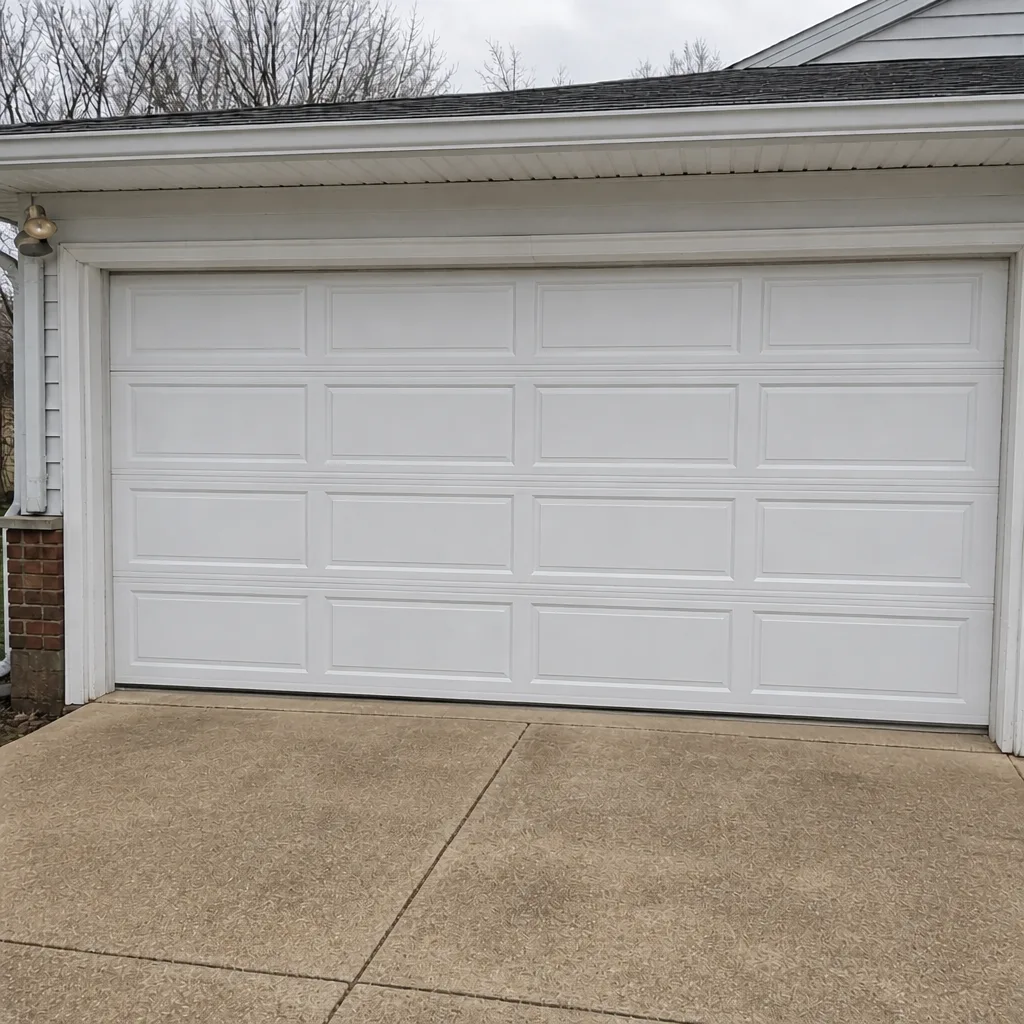 After
When to Call a Professional
Some garage door problems are safe to watch and some aren’t. Call us when a spring breaks or shows a gap, when the door comes down unevenly or won’t stay up, when a cable is frayed or hanging, when the door won’t open or close at all, or when the opener stops responding and a simple sensor alignment doesn’t fix it. If your door is stuck open and your house is exposed, or stuck closed and you can’t get your car out, that’s an emergency call. We offer emergency garage door service for exactly those situations. Spring and cable work is dangerous to attempt yourself, so let a specialist handle anything involving tension. Dayton Garage Door Repair Co offers free estimates in Dayton, with the price quoted before any work starts. Call (877) 704-1590.
Frequently Asked Questions
Garage door springs in Dayton typically last 7 to 12 years, though the local freeze-thaw cycle can shorten that compared to milder climates. Torsion springs generally outlast extension springs, and regular lubrication helps them last longer. Call (877) 704-1590 if your springs show signs of wear – estimates are free.
Composite is the best material for Dayton’s humidity and temperature swings because it resists moisture, warping, and rust. Steel is a close second and more affordable if the finish is kept intact. Wood looks best but needs the most upkeep against local humidity. Call (877) 704-1590 for a free measure and a written price.
Most HOAs in Dayton suburbs like Centerville, Beavercreek, and Oakwood require approval or at least compliance with rules on color, window placement, and panel style. Get the current guidelines in writing from your association before ordering. Call (877) 704-1590 if you want help understanding what your door options are.
For most common repairs, yes. Spring replacements, opener fixes, and sensor problems are often handled the same day, and we offer emergency service when a door is stuck open or stuck closed. Replacement and installation are measured, ordered, and scheduled instead. Call (877) 704-1590 for an exact timeline.
No. We give you a written quote before any work starts, and that quote is the price. If we find something extra during the job, we come to you before doing anything beyond the agreed scope. Call (877) 704-1590 for a free estimate.
The local professionals we connect you with are licensed and insured as their state requires. Our technicians have up to 10 years of experience, and we work on all eight common residential brands: LiftMaster, Chamberlain, Genie, Clopay, Amarr, Wayne Dalton, Craftsman, and Raynor. Call (877) 704-1590 for a free estimate.
The Bottom Line
Garage doors in Dayton fail in predictable ways, and those patterns are shaped by the local climate, the age of the housing stock, and the HOA rules in the suburbs. Springs and bottom seals take the most abuse from the freeze-thaw cycle. Material matters, and composite and well-maintained steel handle the humidity best. HOA communities in Oakwood, Centerville, and Beavercreek decide a lot of door choices before you shop. Knowing the eight common brands and their failure points helps you spot problems early, and reading a door’s history during a home purchase saves you from surprises. Most of all, treat spring and cable work with respect and call a specialist for anything involving tension.
If you’re in Dayton and your door needs attention, whether it’s a failing spring, an opener that quit, or a new door on your mind, call us at (877) 704-1590. Estimates are free, the price is agreed before work starts, and our technicians have up to 10 years of experience on the brands you’ll find in your garage.
Written by the team at Dayton Garage Door Repair Co.